Tag: Digital Transformation

  • The AI Change Management Playbook: Leading Transformation Without Organizational Risk

    The AI Change Management Playbook: Leading Transformation Without Organizational Risk

    Introduction

    Most AI initiatives do not fail because the technology is ineffective. Instead, they fail because organizations underestimate the governance and behavioral changes required to support it. In practice, AI change management is not just about adoption, it is about controlling how intelligence is introduced into decision-making systems.

    By 2026, AI is no longer experimental. However, many organizations still struggle to move from pilot programs to scaled deployment because they treat AI as a tool rather than a governed capability (McKinsey, 2025). As a result, transformation slows not at the technical level, but at the human and organizational control layer.

    Therefore, AI change management must now be treated as a risk-managed transformation discipline, not just an adoption strategy.

    Why AI Change Management Is Now a Governance Issue

    Unlike previous digital transformations, AI directly influences how decisions are made. Consequently, it affects accountability, authority, and risk exposure across the organization.

    While traditional systems execute instructions, AI systems generate recommendations that may influence business-critical outcomes. For this reason, organizations must define not only how AI is used, but also how its influence is controlled.

    In addition, employees often respond to AI with uncertainty because it alters perceived job security and decision authority. If left unmanaged, this can result in silent resistance, partial adoption, or unsafe workaround behavior.

    AI Adoption Risk Categories

    Before deploying AI systems, organizations should evaluate adoption risk across the following governance failure modes:

    1. Undefined Decision Authority

    When AI outputs are used without clear ownership, responsibility becomes fragmented. As a result, accountability gaps emerge during failures.

    2. Uncontrolled Tool Framing

    If AI is treated as optional software rather than a defined capability, adoption becomes inconsistent and unregulated.

    3. Weak Executive Sponsorship

    Without leadership enforcement, AI adoption becomes departmental rather than organizational, leading to fragmented governance.

    4. Non-Governed Training

    Training focused only on tool usage—rather than decision boundaries—creates operational misuse and over-reliance.

    5. Silent Resistance

    Even when systems are deployed, employees may avoid or bypass AI tools due to trust gaps, especially when governance is unclear.

    The Controlled AI Change Execution Model

    To reduce risk while enabling adoption, organizations should implement a structured control framework.

    Step 1: Define AI-Influenced Decisions

    Rather than automating departments, organizations should identify specific decisions where AI is allowed to participate.

    These must be explicitly documented and approved before deployment.

    Step 2: Establish Change Control Ownership

    To ensure accountability, AI transformation must have assigned ownership at the leadership level.

    This includes responsibility for:

    • Adoption outcomes
    • Risk monitoring
    • Governance enforcement

    Without ownership, AI change programs become unmanaged operational risk.

    Step 3: Implement Role Redefinition Boundaries

    AI changes job functions rather than replacing them outright. Therefore, organizations must define what AI handles versus what humans must retain control over.

    In practice, AI should operate as a decision-support layer, while humans remain responsible for final approval in sensitive workflows.

    Step 4: Enforce Communication and Adoption Controls

    Communication must clearly state that AI reduces repetitive workload, not accountability. Additionally, employees must be informed that AI usage is monitored, governed, and aligned with internal policy standards.

    This reduces uncertainty and improves compliance-driven adoption.

    Step 5: Measure Adoption Through Governance Metrics

    Instead of tracking usage alone, organizations should measure:

    • Decision speed improvement
    • Error rate reduction
    • Compliance adherence in AI workflows
    • Human override frequency

    These indicators reflect controlled adoption quality, not just activity.

    AI Governance Requirements for Change Management

    Successful AI transformation requires integration with formal governance structures.

    1. AI Change Policy Integration

    Organizations must define:

    • Approved AI use cases
    • Restricted AI applications
    • Required approval workflows
    • Escalation procedures for misuse

    2. Data Governance Alignment

    AI systems must comply with internal data classification rules. Sensitive data must be restricted from uncontrolled processing environments.

    3. Audit and Traceability Requirements

    All AI-influenced decisions must be traceable. This includes:

    • Input data sources
    • AI-generated outputs
    • Human approvals
    • Final decisions

    This ensures accountability and supports compliance with frameworks such as the International Organization for Standardization AI governance standards.

    4. Regulatory Awareness in Deployment

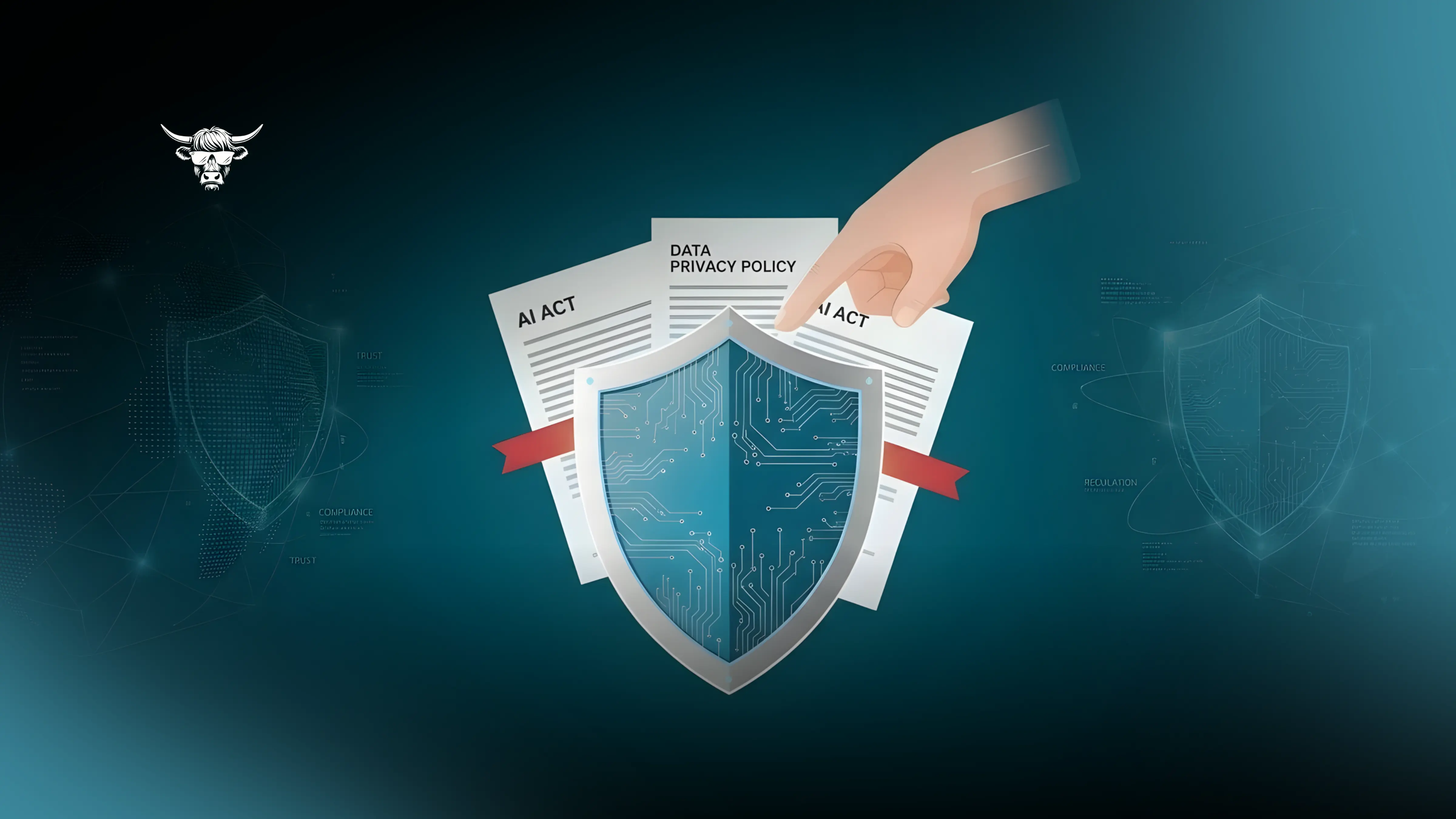
    Organizations must evaluate AI systems against applicable regulations, including emerging requirements under frameworks such as the European Union AI Act.

    Building a Governed AI Change Model

    To ensure sustainable adoption, organizations must treat AI transformation as a controlled system rather than a cultural initiative alone.

    As a guiding principle, AI should be governed before it is scaled. Therefore:

    • Employees must be trained on decision boundaries, not just tool usage
    • AI outputs must be treated as advisory, not authoritative
    • Every AI-driven workflow must have a defined human accountability owner
    • Exceptions must be formally documented and reviewed

    This ensures that adoption happens within a controlled risk framework rather than through informal usage.

    Conclusion

    AI change management is no longer a soft organizational challenge. It is a governance discipline that determines how safely intelligence is integrated into business operations. While AI can accelerate decision-making and improve efficiency, it also introduces new layers of risk if left unmanaged. Therefore, successful organizations are those that treat AI transformation as a controlled system where adoption, authority, and accountability are clearly defined. Ultimately, AI does not fail because people resist it. It fails because organizations fail to govern how it is introduced, interpreted, and acted upon. Structured change management is not just a strategy but a required safeguard for responsible AI adoption.

    References:

  • How to Identify AI Opportunities in Your Business Without Creating Security or Compliance Risk

    How to Identify AI Opportunities in Your Business Without Creating Security or Compliance Risk

    Introduction

    In the early 2020s, the conversation around Artificial Intelligence was driven by hype. In 2026, the conversation has shifted to accountability. Leaders are no longer asking whether their teams use AI. They are asking whether it is secure, governed, and compliant.

    That shift matters. Many organizations rush into AI adoption without understanding where company data goes, what regulations apply, or who is responsible when mistakes happen. The result is not innovation. It is exposure.

    This guide provides a practical framework to help businesses identify valuable AI opportunities while protecting operations, customer trust, and regulatory standing.

    I. The Rules of Intelligence Opportunity Audit

    Before investing in any AI tool or automation platform, assess your current environment first. Most businesses do not fail because AI lacks potential. They fail because they apply new technology to unmanaged processes and unsecured data.

    1. The Three-Column Risk and Opportunity Map

    Gather department heads and review recurring workflows using this three-column framework:

    • Column A: Frequency. How often does the task occur? Daily, weekly, or monthly?
    • Column B: Sensitivity. Does the task involve confidential data such as customer records, financial details, HR files, contracts, or intellectual property?
    • Column C: Control. Where does the information live? Is it inside approved systems with access controls, or scattered across personal inboxes, spreadsheets, and downloads?

    Your best AI opportunities exist where tasks are high-frequency, low-risk, and supported by controlled data.

    These are the areas where AI can improve speed and consistency without creating unnecessary compliance exposure.

    2. Identify Hidden Risk in Operational Friction

    The most valuable AI opportunities are often found in support processes. They are also where hidden risk lives.

    Look for friction in areas such as:

    • The Procurement Gap: Long vendor approval cycles often skip security review when urgency takes over. AI vendors should be assessed for data handling, retention, and contractual protections.
    • The Onboarding Lag: New hires need answers quickly, but unrestricted access to internal knowledge bases can expose sensitive data. Access permissions matter.
    • The Data Silo: When teams manually move lead lists or reports between systems, sensitive information can be copied into unapproved tools.

    These issues seem minor day to day, but over time they create operational drag and compliance risk.

    II. The Technical Framework: Augmentation Without Exposure

    The Centaur Model 

    A “Centaur” combines human judgment with AI speed. In business, this means using AI to support decisions while people remain accountable for approvals, context, and exceptions.

    Strategic Insight

    Do not look for people to replace. Look for unsafe or inefficient processes to improve.

    If your creative director spends hours searching for approved brand assets, an AI-powered Digital Asset Manager does not replace them. It helps them work faster inside a governed environment.

    If your finance team spends hours summarizing invoices, AI can assist, but final review should remain with authorized personnel.

    Human Oversight Still Matters

    AI-generated outputs can be inaccurate, biased, or incomplete. High-impact decisions involving hiring, finance, legal obligations, or customer disputes should always include human review.

    III. The Compliance Questions to Ask Before You Deploy AI

    Before launching any tool, leadership should be able to answer these questions:

    1. Where Does the Data Go?

    Does the vendor store prompts, uploaded files, or outputs? Is your data used for model training?

    2. Who Has Access?

    Can you enforce role-based permissions, single sign-on, and employee offboarding controls?

    3. What Law Applies?

    Depending on your industry or customers, privacy and AI laws may apply, including requirements tied to the European Union AI Act, consumer privacy laws, and sector-specific regulations.

    4. Can You Audit It?

    Can you document usage, decisions, approvals, and incidents if regulators, customers, or leadership ask for evidence?

    5. Who Owns the Output?

    Review contracts carefully. Clarify ownership, confidentiality, and liability before relying on vendor-generated outputs.

    IV. 2026 Policy Trends Businesses Should Watch

    The primary reason AI initiatives fail is scope creep. To keep your team engaged and focused, follow the 1-3-1 Strategy

    1. AI Governance Is Becoming a Leadership Issue

    Boards and executives increasingly expect formal oversight for AI initiatives, especially where customer data or automated decision-making is involved.

    2. Vendor Risk Reviews Are Expanding

    Security questionnaires now increasingly include AI usage, subprocessors, model governance, and retention practices.

    3. Documentation Is No Longer Optional

    Organizations that cannot explain how AI is used, monitored, and controlled may struggle with enterprise sales, audits, or partnership reviews.

    4. Internal Policies Are Becoming Standard

    Companies are creating acceptable use policies that define approved tools, restricted data, review requirements, and escalation paths.

    V. Avoiding the Overwhelm Trap

    The biggest mistake in AI adoption is trying to do everything at once. Keep your rollout focused with the 1-3-1 Strategy:

    1 Pilot Project

    Choose one low-risk, high-value use case such as meeting summaries, internal knowledge search, or first-draft content creation using approved data sources.

    3 Months

    Run the pilot for 90 days with clear ownership and regular check-ins.

    1 Metric

    Measure one outcome such as hours saved, response time improved, or reduction in repetitive tasks.

    VI. Build Trust With a Clear Internal Policy

    Overwhelm is not only caused by tools. It is caused by uncertainty. Employees need to know what is allowed, what is restricted, and how AI supports their role.

    A basic AI policy should define:

    • Approved tools and vendors
    • Prohibited data types for public tools
    • Human review requirements
    • Security expectations
    • Escalation process for incidents
    • Ownership and recordkeeping standards

    A secure team is more likely to innovate than a confused one.

    VII. Authority & Verification

    We evaluate AI opportunities against recognized global standards and market signals:

    • International Organization for Standardization / IEC 42001 for AI management systems
    • Gartner reporting continued enterprise AI governance growth
    • McKinsey & Company research on measurable economic value from generative AI
    • Stanford Institute for Human-Centered AI insights on responsible adoption and workforce impact

    Conclusion: Use AI With Control, Not Chaos

    Identifying AI opportunities does not require chasing every new tool. Start with slow, repetitive, and manageable processes. Then apply AI where it creates value without compromising trust, security, or compliance.

    The most powerful force in your business is still your people. AI works best when it strengthens their judgment, not when it replaces it.

    References: 

  • 7 Signs Your Business is Ready for AI Transformation in 2026

    7 Signs Your Business is Ready for AI Transformation in 2026

    Artificial Intelligence (AI) isn’t a futuristic concept anymore, it’s transforming how businesses operate today. AI transformation in 2026 depends on strategy, culture, data preparedness, and clarity on business goals. While many companies are exploring AI, not all are truly ready to leverage it for meaningful impact. Leveraging AI successfully requires strategy, culture, data preparedness, and clarity on business goals. 

    In fact, research shows that although AI adoption is growing rapidly, only a small percentage of organizations are fully prepared to capture its full potential — yet those that do see measurable results. 

    Here are 7 clear signs your business is ready for AI transformation in 2026. 

    1. Your Operations Include Repetitive Manual Tasks 

    If your team spends hours on manual processes like data entry, reporting, or scheduling, AI can help automate these tasks — freeing up time for strategic work. AI tools excel at automating repetitive work and helping teams focus on higher‑value initiatives. 

    Businesses using AI often report productivity improvements and operational gains that drive efficiency across functions. 

    2. You Have Lots of Data — but Struggle to Use It 

    AI thrives on quality data. If your business collects data but doesn’t use it effectively, you’re likely missing insights that could inform smarter decisions and reveal patterns that drive growth. 

    Studies show that organizations with strong data practices — where data is accessible, organized, and actionable — are more successful at deploying AI at scale. 

    3. Your Team Is Open to Innovation and Learning 

    AI adoption isn’t just technological — it’s cultural. A workforce that’s open to innovation, experimentation, and learning is much more likely to integrate AI successfully. 

    According to studies on business readiness, aligning strategy with employee engagement and adaptability is a key component of real AI transformation. 

    5. Customer Expectations Are Evolving 

    Customers today expect faster responses, personalized experiences, and seamless interactions. AI technologies — from chatbots to predictive analytics — help businesses respond quickly and accurately to customer needs. 

    In 2025, studies show that a majority of small and medium businesses using AI report increases in revenue and improved customer outcomes, with many calling AI a game‑changer for growth. 

    5. Customer Expectations Are Evolving 

    Customers today expect faster responses, personalized experiences, and seamless interactions. AI technologies — from chatbots to predictive analytics — help businesses respond quickly and accurately to customer needs. 

    In 2025, studies show that a majority of small and medium businesses using AI report increases in revenue and improved customer outcomes, with many calling AI a game‑changer for growth. 

    6. You Want to Scale Without Increasing Costs Proportionally 

    AI enables organizations to grow more efficiently by automating administrative work, enhancing forecasting, and streamlining workflows — often without requiring significantly more staff. 

    Small and medium businesses adopting AI report significant operational improvements and revenue boosts compared to those lagging in adoption.

    7. You Have Clear Goals for AI Implementation 

    Being ready for AI means more than having technology — it means having strategic intent. Businesses that define what they want AI to achieve (e.g., improving productivity, enhancing sales forecasting, or streamlining customer service) are far more likely to see tangible results. 

    Organizations with well‑defined AI strategies tend to move faster from experimentation to full implementation. 

    Why This Matters?

    AI isn’t just about using new tools — it’s about integrating intelligent capabilities into the core of your business. Here’s what the data shows:

    • A large majority of SMBs using AI report growth — with surveys indicating that over 75% see positive revenue impact and improved efficiency. 
    • Organizations that are truly AI‑ready are significantly more likely to turn pilots into production and realize measurable value. 
    • Only a small fraction of businesses have reached full AI readiness, highlighting the competitive advantage of getting prepared now. 

    Conclusion: Readiness Is a Competitive Advantage 

    AI transformation doesn’t happen overnight, but recognizing these signs can put you ahead of competitors who are still uncertain or undecided. The businesses that build strategy, foster cultural readiness, and use data effectively will lead in 2026 and beyond. 

    If you’re ready to explore how your business can adopt AI with clarity and purpose, start with a Tech Simplification Session to identify opportunities fast — and consider an AI Catalyst Blueprint to design a roadmap for long‑term success. 

  • What Is AI Regulation and Why It Matters for Small Businesses?

    What Is AI Regulation and Why It Matters for Small Businesses?

    Introduction

    Artificial Intelligence (AI) is everywhere today. It powers chatbots, screens job applicants, runs smart ads, and even answers customer emails. As AI becomes more powerful and starts making bigger decisions, governments around the world are creating new rules for how it should be used.

    These rules are called AI regulations.

    If you run a small business, understanding these rules matters. They can affect the way you hire, market, and serve customers. More importantly, knowing them helps you avoid penalties, build trust, and stay competitive.

    What Are AI Regulations

    AI regulations are laws and standards that guide how AI can be used responsibly in business and daily life.

    They often focus on four key areas:

    • Data safety: Protect people’s information and prevent misuse.
    • Fairness: Ensure that AI decisions do not discriminate.
    • Transparency: Inform people when they are interacting with AI instead of a human.
    • Accountability: Keep clear records to show that your AI tools work safely and as intended.

    In short, AI regulation for small businesses means using AI tools in an ethical, safe, and transparent way. These rules guide companies to act responsibly while maintaining innovation.

    Why Should Small Businesses Care About AI Regulations?

    AI laws affect more than just big tech companies. Small businesses also use AI tools every day — for hiring, marketing, pricing, or customer service.

    1. Avoid costly fines

    New laws like the EU AI Act can lead to large penalties for violations. Some fines can reach millions of euros, even for smaller firms. In the U.S., several states are also setting their own rules and fines.

    Because of that, understanding compliance early helps you save time and money later.

    2. Build customer trust

    Customers want to know that businesses use AI responsibly. When you follow AI regulations, you show your audience that you care about fairness and transparency. This trust can increase loyalty and improve your reputation.

    For example, if your business uses an AI chatbot, you can simply tell customers that it’s an automated system. This honesty builds credibility.

    3. Stay ahead of change

    AI rules will continue to evolve. By preparing now, you can adapt faster and avoid disruptions. In addition, staying informed gives you an advantage over competitors who wait until compliance becomes mandatory

    What’s Ahead in The Rules of Intelligence October Series

    In this month’s “Rules of Intelligence” series, we’ll break down:

    • How U.S. states are shaping their own AI laws
    • What the European Union AI Act means for small businesses
    • How countries like China and the UK regulate AI differently
    • A simple checklist to help keep your business compliant

    Whether you run an online shop, a local service, or a growing startup, these guides will help you understand and adapt to the evolving AI landscape.