Introduction: Beyond the Automation Buzz
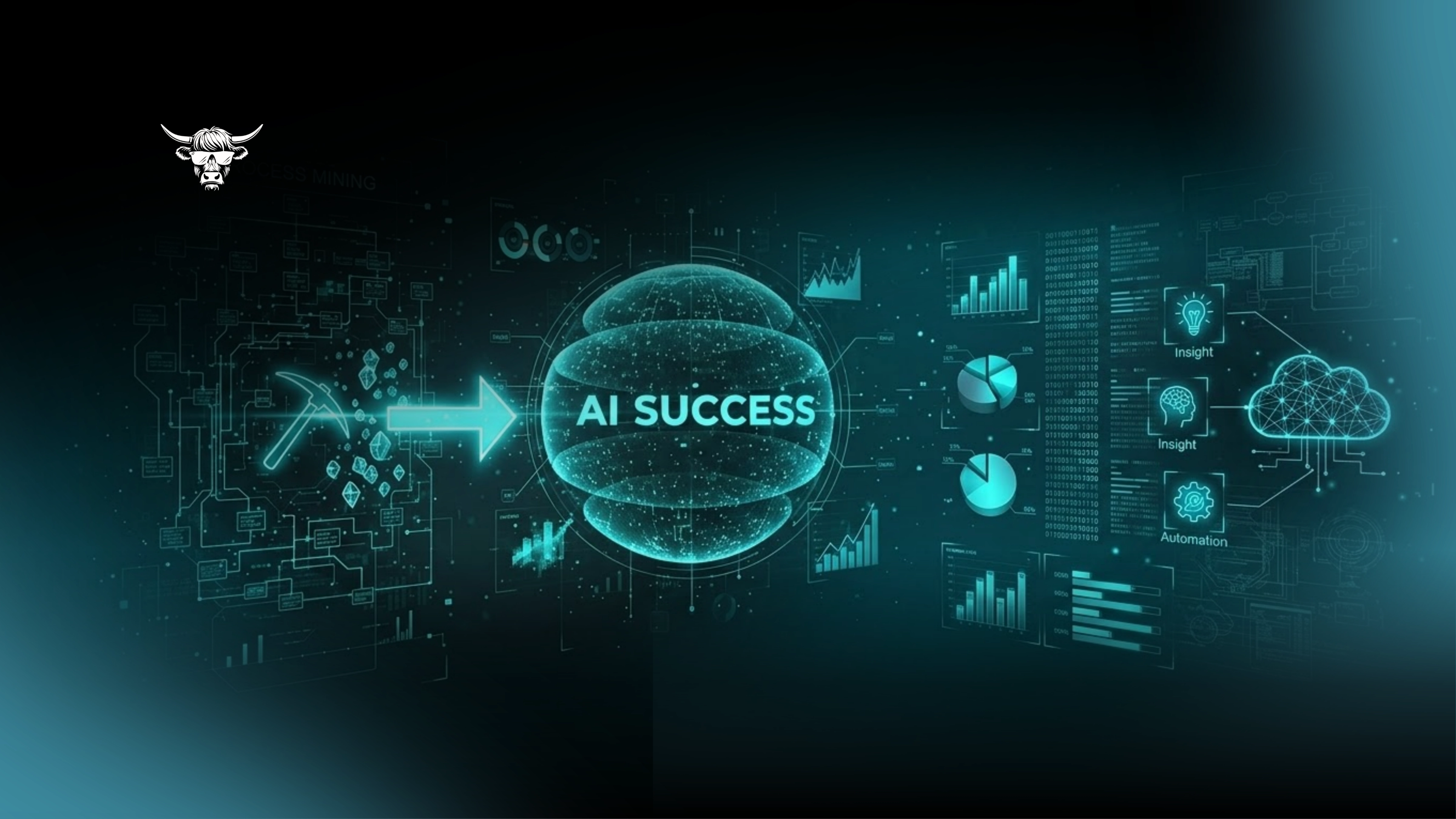
Business process automation is no longer a luxury in 2026, it is the baseline for enterprise survival. However, the most successful leaders understand that automating a broken process only accelerates failure. True transformation requires a dual-threat approach: process mining and AI.
We recently analyzed how a Fortune 500 leader successfully integrated these technologies to dismantle operational silos, eliminate “invisible” bottlenecks, and drive measurable, high-tier outcomes (Deloitte, 2025). By moving beyond the surface-level buzz, we can see exactly how data-driven visibility turns fragmented workflows into a unified engine for growth.
The Challenge: Visibility in the Dark
Like many enterprise-level organizations, this company struggled with “invisible” friction. Their challenges weren’t just about speed; they were about fragmented systems and manual redundancies that created decision-making bottlenecks (Gartner, 2025). Without a unified view of their data, they were automating broken processes rather than fixing them.
Our 3-Step Transformation Framework
| Phase 1: Deep Process Discovery Before we apply AI, we must see the “truth” of the workflow. By utilizing process mining, the organization visualized every operational step across departments. | The Result: They identified 14 hidden redundancies and mapped exactly where manual tasks were stalling high-value projects. |
| Phase 2: AI-Driven Optimization Once the map was clear, AI moved from a passive tool to an active strategist. Algorithms analyzed the mined data to predict where future bottlenecks would occur. | The Shift: Instead of just reacting to delays, the system began recommending optimizations in real-time, automating the most repetitive portions of the lifecycle. |
| Phase 3: Integration & Real-Time Monitoring The final hurdle was ensuring these improvements weren’t temporary. By integrating AI directly into existing ERP and CRM systems, the company created a “living” operational dashboard. | The Outcome: Automated scheduling and resource allocation meant the right people were on the right tasks at the right time (Deloitte, 2025). |
Results: Measurable Impact
The impact was immediate and measurable:
- 25% reduction in operational cycle time
- 30% fewer manual errors
- Improved decision-making with real-time insights
Conclusion
The synergy of process mining and AI is far more than a technical upgrade, it is a roadmap for high-scale operational intelligence. As this case study demonstrates, when we stop guessing where bottlenecks exist and start visualizing them through data, we move from reactive troubleshooting to predictive leadership.
At Intuitive Operations, we’ve seen that organizations embracing this dual-threat approach don’t just work faster; they build a foundation of “Decision Intelligence.” By removing the friction of manual redundancies, we empower teams to focus on high-impact innovation, ensuring a competitive edge that manual processes simply cannot replicate in 2026.
References
- Deloitte Insights. (2025). Process mining and AI for enterprise automation. Deloitte. Retrieved from https://www2.deloitte.com
- Gartner. (2025). Business process automation trends. Gartner. Retrieved from https://www.gartner.com