November 2025 – Global Policy Shifts, New Rules, and What They Mean for Small Businesses
Introduction
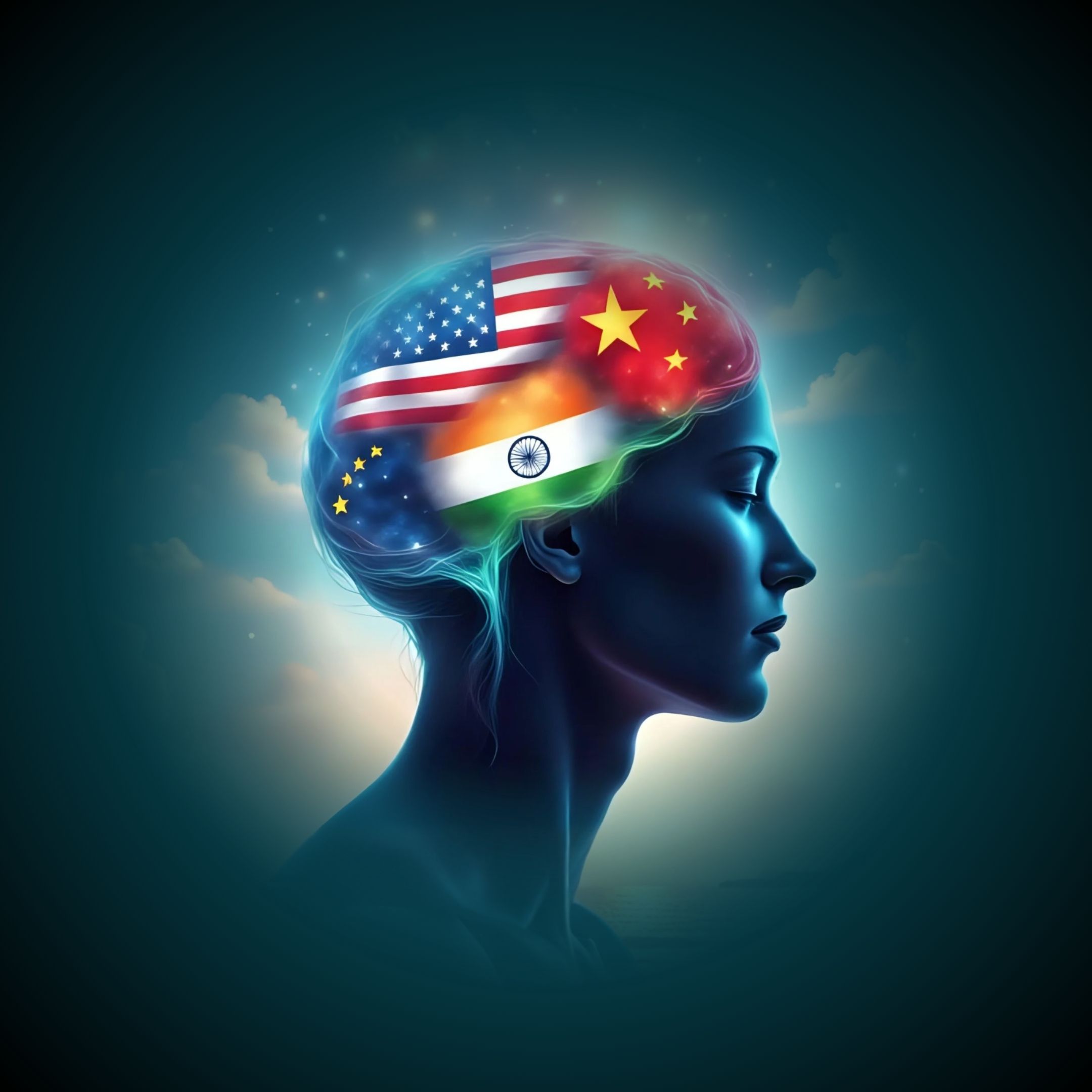
November 2025 is a turning point for AI regulation worldwide. From India’s innovative “third path” to sweeping US deregulation, the EU’s phased AI Act, China’s assertive tech sovereignty, Singapore’s new accountability rules, and a US multistate task force, the regulatory landscape is more complex—and consequential—than ever. Small businesses must act early to navigate this evolving patchwork and stay compliant.
What’s New in AI Regulations 2025: Country Highlights
1. India’s National AI Governance Guidelines (November 5, 2025)
India has unveiled its National AI Governance Guidelines, marking a significant step in global AI policy. Unlike the prescriptive, risk-based EU model or the market-driven US approach, India’s guidelines introduce a principle-based, participatory framework. This “third path” emphasizes:
- Trust, Fairness, and Transparency: All AI systems must be designed and deployed to uphold these values, with explicit requirements for explainability and bias mitigation.
- Sectoral Oversight: Each sector (e.g., finance, healthcare) will have tailored oversight, with relevant ministries and regulators responsible for compliance and risk management.
- Participatory Governance: The guidelines were developed through broad stakeholder engagement, including public consultations and partnerships with industry and civil society.
- SME Support: Recognizing the unique challenges faced by small and medium enterprises, India’s framework includes scaled compliance requirements, simplified reporting, and access to government-backed capacity-building programs.
- Implementation Timeline: Public feedback on the draft closed November 6, 2025. The guidelines will roll out in phases starting early 2026, with the first formal review scheduled within 12 months of implementation.
For SMEs:
India’s approach offers flexibility and support, but requires all businesses to document AI system design, data sources, and risk assessments—especially for high-impact applications. Early engagement with sectoral regulators is advised.
2. US Executive Orders: A Major Shift Toward Deregulation (January 2025)
In January 2025, the US government issued Executive Order 14192 (“Unleashing Prosperity Through Deregulation”) and a companion order, fundamentally changing the federal approach to AI regulation:
- Deregulatory Mandate: For every new federal regulation, agencies must repeal at least ten existing ones. The total cost of new regulations must be negative for FY2025.
- Revocation of Prior Orders: The Biden-era Executive Order 14110 (“Safe, Secure, and Trustworthy Development and Use of Artificial Intelligence”) and related guidance were rescinded, removing many risk and oversight requirements.
- Policy Focus: The new orders prioritize US global AI leadership and innovation, explicitly rejecting “ideological bias” in federal AI policy.
- Implementation: Agencies must review and eliminate existing policies that inhibit AI innovation, with OMB providing detailed compliance guidance.
- Impact on SMEs: Compliance costs are expected to drop, and regulatory barriers to AI adoption are lower. However, the rapid shift creates uncertainty, especially for businesses that invested in compliance with previous rules. The lack of federal standards may also lead to a patchwork of state-level regulations.
3. EU AI Act Implementation: New Obligations and Possible Delays
The EU AI Act, the world’s first comprehensive AI law, is being phased in:
- August 2, 2025: Key governance structures and obligations for general-purpose AI (GPAI) models are now in effect. Providers must maintain technical documentation, publish transparency reports, and summarize training data.
- August 2, 2026: Full applicability for most provisions, including high-risk AI system requirements.
- Possible Delays: As of November 2025, the European Commission is considering a “Digital Omnibus” amendment to delay some provisions (especially for high-risk and transparency requirements) due to missing technical standards and guidance. No formal delay has been enacted yet.
- Enforcement: Non-compliance can result in fines up to €35 million or 7% of global turnover. SMEs benefit from capped penalties and simplified compliance, but still face significant documentation and due diligence requirements.
- Support for SMEs: Regulatory sandboxes and dedicated guidance are being rolled out, but many small businesses are advocating for further delays until all technical standards are finalized.
4. China’s Ban on Foreign AI Chips (October 2025): Tech Sovereignty in Action
China’s October 2025 directive bans the use of foreign-made AI chips in all new state-funded data centers:
- Scope: Applies to all new projects with state funding, including government systems and key infrastructure. Data centers under 30% completion must remove or cancel foreign chips.
- Domestic Alternatives: Only Chinese-made chips (e.g., Huawei, Cambricon) are permitted.
- Enforcement: Immediate effect, with regulatory oversight by the Cyberspace Administration of China and the Ministry of Industry and Information Technology.
- Broader Impact: US chipmakers like Nvidia and AMD are now excluded from the world’s second-largest chip market. The move accelerates China’s push for “algorithmic sovereignty” and decouples global tech supply chains.
- SME Impact: International SMEs with operations or partnerships in China face increased costs, supply chain disruptions, and the need to rapidly switch to domestic hardware.
5. Singapore’s Financial Sector Guidelines (October 2025): Personal Accountability for AI Risk
The Monetary Authority of Singapore (MAS) has introduced new guidelines making bank boards and senior executives personally accountable for AI risk management:
- Board Oversight: Boards must demonstrate technical literacy and direct oversight of AI risk, with AI risk a standing agenda item.
- Senior Management: Must appoint a senior executive responsible for AI risk, ensure robust controls, and maintain an up-to-date inventory of all AI use cases.
- Proportionate Enforcement: Requirements are scaled to the size and complexity of each financial institution, with a 12-month transition period for compliance.
- SME Impact: Smaller financial service providers benefit from proportionate expectations, but must still implement clear governance and risk management frameworks.
6. US Multistate AI Task Force (October 2025): Tackling Regulatory Fragmentation
Launched in October 2025, the US Multistate AI Task Force is a bipartisan initiative led by North Carolina and Utah Attorneys General:
- Objectives: Identify emerging AI risks, develop baseline safety standards, and coordinate state responses to AI challenges.
- Voluntary Standards: The task force aims to create model guidelines for states and industry, reducing the compliance burden from conflicting state laws.
- SME Support: By promoting harmonized, practical guidance, the task force seeks to lower compliance costs and legal uncertainty for small businesses operating across multiple states.
- Timeline: Initial policy proposals are expected within 6–12 months, with ongoing stakeholder engagement.
Key Dates & Upcoming Reviews
| Date | Event/Policy Change |
| Nov 5, 2025 | India’s National AI Governance Guidelines released (public feedback closed Nov 6, 2025) |
| Jan 2025 | US Executive Orders 14192 and 14179 issued (deregulation, revocation of prior AI orders) |
| Aug 2, 2025 | EU AI Act: GPAI obligations and governance rules in force |
| Aug 2, 2026 | EU AI Act: Full applicability for most provisions |
| Oct 2025 | China’s ban on foreign AI chips in state-funded data centers enforced |
| Oct 2025 | Singapore’s Financial Sector AI Guidelines released |
| Oct 2025 | US Multistate AI Task Force launched |
| Early 2026 | India’s AI guidelines phased rollout begins |
| Late 2026 | First formal review of India’s AI guidelines |
| 2026 | EU regulatory sandboxes and further guidance expected |
Summary for Small Businesses:
The global AI regulatory environment is more fragmented and fast-moving than ever. Small businesses must proactively catalog their AI systems, monitor sector-specific rules, and seek guidance from regulators and industry groups. Early action is critical to manage compliance risks and seize opportunities in this new era of AI governance.
References:
- Ministry of Electronics and Information Technology (MeitY), Government of India. (2025). National AI Governance Guidelines.
- Digital India Corporation. (2025). IndiaAI Policy Documents.
- North Carolina Department of Justice. (2025). Multistate AI Task Force Announcement.
- Attorney General Alliance. (2025). AI Task Force Charter.
- White House. (2025). Executive Order 14192.
- White House. (2025). Executive Order: Removing Barriers to American Leadership in AI.
- Office of Management and Budget (OMB). (2025). Memorandum M-25-20.
- European Commission. (2025). EU AI Act Implementation Update.
- European Parliament. (2024). AI Act Final Text.
- Cyberspace Administration of China. (2025). Guidance on AI Chips in Data Centers.
- Ministry of Industry and Information Technology (MIIT), China. (2025). AI Hardware Policy.
- Monetary Authority of Singapore. (2025). Guidelines on AI Risk Management.
- DLA Piper. (2025). GDPR and AI Fines Tracker.
- OECD. (2025). SME Digitalization Survey.
- European Investment Bank. (2025). SME AI Adoption Report.
- European Commission. (2025). AI Act Sectoral Guidance.
- Utah Attorney General’s Office. (2025). AI Task Force Press Release.
- North Carolina Attorney General’s Office. (2025). AI Task Force Press Release.
- OpenAI. (2025). AI Task Force Partnership Announcement.
- Microsoft. (2025). AI Task Force Collaboration.
- Attorney General Alliance. (2025). AI Task Force Model Guidelines.
- MeitY. (2025). National AI Governance Guidelines – Public Consultation Notice.
- Digital India Corporation. (2025). IndiaAI Policy Overview.
- European Commission. (2025).
- Ministry of Industry and Information Technology (MIIT), China. (2025). AI Hardware Policy.
- Cyberspace Administration of China. (2025).
- Monetary Authority of Singapore. (2025).