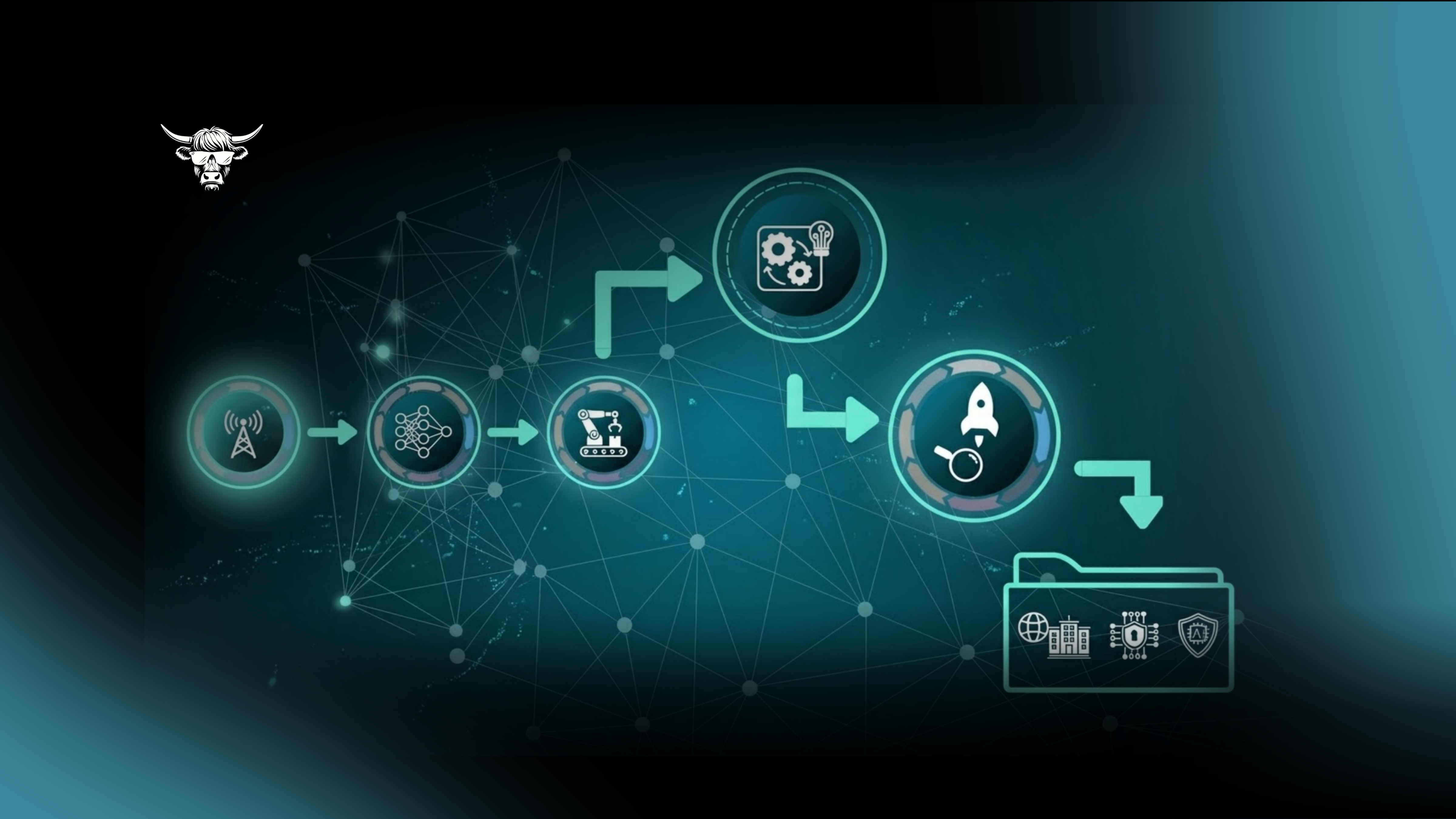
Measuring AI Success in 2026 requires more than tracking productivity gains or automation counts. While many organizations still focus on time saved and tool adoption, strategic leaders now evaluate whether AI improves decision-making, operational responsiveness, and long-term business performance.
As AI systems become more integrated into daily operations, businesses must shift from measuring activity to measuring organizational intelligence.
Why Traditional AI Metrics No Longer Work
Many businesses still evaluate AI using traditional software metrics such as:
- hours saved
- tasks automated
- reduction in manual work
While those metrics provide operational visibility, they rarely measure strategic value.
AI changes more than workflow speed. It changes:
- how organizations identify risk
- how leaders prioritize opportunities
- how quickly teams respond to market changes
- how accurately businesses forecast outcomes
Therefore, measuring AI success requires broader leadership metrics tied directly to business performance.
Recent industry analysis shows that organizations increasingly prioritize measurable workflow outcomes over broad AI experimentation (PwC, 2026).
The Shift from Productivity Metrics to Intelligence Metrics
Traditional KPIs focus on efficiency. However, intelligence metrics focus on decision quality and organizational responsiveness.
For example:
- Productivity metrics measure task completion speed.
- Intelligence metrics measure operational effectiveness.
This distinction matters because businesses can automate poor decisions just as easily as effective ones.
As a result, organizations should evaluate whether AI improves:
- forecasting confidence
- operational clarity
- response speed
- customer retention
- margin protection
The goal is not simply to use AI more often. The goal is to improve business intelligence across the organization.
5 Strategic KPIs for Measuring AI Success
1. Decision Velocity
Decision Velocity measures how quickly an organization reacts to operational signals.
For example:
- How quickly can leaders respond to declining sales?
- How fast can teams identify supply chain disruptions?
- How rapidly can staffing or pricing adjustments happen?
AI should reduce delays between insight and action.
Organizations with faster Decision Velocity often adapt more effectively during periods of uncertainty.
2. Prediction Accuracy
Many businesses now rely on AI for:
- revenue forecasting
- customer behavior analysis
- operational planning
- inventory projections
However, prediction systems require continuous monitoring.
Leaders should compare:
- projected outcomes
- actual outcomes
- variance trends over time
Increasing variance may indicate “data drift,” where AI recommendations become less reliable because conditions have changed.
Therefore, Prediction Accuracy is a critical indicator of long-term AI effectiveness.
3. Process Cycle Time
Instead of measuring isolated tasks, organizations should evaluate full operational workflows. Examples include:
- lead-to-cash cycle
- onboarding workflows
- fulfillment operations
AI may improve individual tasks while the overall process remains inefficient. As a result, Process Cycle Time provides a more accurate view of operational improvement. (World Economic Forum, 2025)
4. Customer Sentiment Correlation
Customer sentiment now extends beyond quarterly surveys. Organizations increasingly use AI systems to monitor:
- customer support interactions
- reviews
- churn indicators
- satisfaction trends
However, the real value comes from correlating sentiment insights with:
- retention
- customer lifetime value
- loyalty trends
- long-term revenue impact
This KPI connects AI systems directly to business relationships and growth outcomes.
5. Leadership Cognitive Load
One of the most overlooked AI metrics is leadership attention allocation. AI should reduce time spent on:
- repetitive reporting
- manual analysis
- administrative review
- operational triage
As a result, leaders gain more time for:
- strategic planning
- relationship management
- executive oversight
- long-term growth initiatives
MIT Sloan (2026) notes that successful organizations increasingly use AI to support human judgment instead of replacing it.
Understanding the Productivity Paradox
Many businesses experience an early productivity decline after implementing AI systems. This temporary slowdown is often called the “Productivity Paradox” or “J-Curve.”
Initially:
- workflows change
- employees adapt to new systems
- operational habits shift
- processes require refinement
However, this temporary decline does not indicate failure.
Organizations that continue optimizing workflows often achieve stronger long-term gains later. (World Economic Forum, 2025)
Common AI Measurement Mistakes
Many SMBs still make avoidable AI measurement errors.
- Measuring Only Time Saved
- Time reduction alone does not guarantee better business performance.
- Tracking Tool Usage Instead of Outcomes
- High AI usage does not automatically create measurable value.
- Ignoring Governance Metrics
- Many organizations track productivity while ignoring:
- compliance risks
- output quality
- explainability
- oversight effectiveness
- Many organizations track productivity while ignoring:
- Measuring Too Many KPIs
- Too many metrics create reporting noise. Strategic leaders focus only on KPIs tied directly to operational performance.
Final Thought: Measure Organizational Intelligence
Businesses that measure AI like software will optimize for efficiency alone. Businesses that measure AI like a leadership capability will optimize for strategic performance.
In 2026, competitive advantage increasingly depends on how quickly organizations convert information into confident action.
The goal is not proving AI exists in the workflow.
The goal is proving the organization became smarter because of it.
Are you measuring AI performance correctly? Review your operational KPIs and identify whether your AI systems are improving business outcomes or simply increasing activity.
References:
- MIT Sloan. (2026). Action items for AI decision makers in 2026.
- PwC. (2026). 2026 AI business predictions: The disciplined march to value.
- World Economic Forum. (2025). Proof over promise: Insights on real-world AI adoption.