AI has enormous potential for businesses, but jumping straight into full-scale AI implementation can be risky. A well-designed AI pilot program lets you test tools in a controlled environment, measure results, and prove ROI before scaling.
Here’s a step-by-step guide to creating an AI pilot program that delivers measurable value.
1. Define Your Objective
Before introducing AI, clearly identify what problem you want it to solve. Common objectives for pilot programs include:
Automating repetitive tasks (e.g., scheduling, data entry)
Improving customer response times
Generating insights from complex datasets
Research shows that organizations with clearly defined AI goals are more likely to see measurable benefits. (Cisco, 2025)
2. Select the Right Use Case
Choose a project that is:
High-impact but low-risk: Start with an area where success is measurable but failure won’t disrupt core operations.
Data-rich: AI thrives on quality data. Ensure your use case has clean, accessible, and sufficient data.
Relevant to stakeholders: Pick a project that demonstrates value to the decision-makers and end users.
For example, customer support teams can pilot a chatbot, while marketing teams can experiment with AI-driven content recommendations.
3. Assemble Your Team
AI pilots need cross-functional collaboration. Typical team roles include:
Project owner or sponsor
AI/technical lead
Data analyst
End-user representatives
Having a team that understands the business problem and the AI technology increases your chance of success. According to research, teams open to experimentation are far more likely to achieve measurable AI outcomes. (Cisco, 2024)
4. Set Measurable KPIs
Before starting, define how you’ll measure success. Examples include:
Reduction in task completion time
Increased lead conversion rate
Customer satisfaction improvements
Error reduction in reports or processes
Using KPIs ensures you can quantify the value of your pilot and justify scaling the AI solution.
5. Build and Test the Pilot
Start small and iterate:
Configure the AI tool for your chosen use case.
Train your team to use it properly.
Run the pilot for a defined period (typically 4–8 weeks).
Track performance against your KPIs.
Pilot programs allow you to identify unexpected challenges and refine the approach without large-scale risk.
6. Analyze and Communicate Results
After the pilot, evaluate the data against your KPIs:
Did the AI improve efficiency or reduce costs?
Were the results consistent and reliable?
What lessons were learned for scaling?
Document results and communicate success clearly to stakeholders. Tangible results increase buy-in for broader AI adoption.
7. Plan for Scaling
Once your pilot proves value:
Identify additional processes or departments that could benefit.
Plan for resource allocation, training, and data integration.
Consider creating a long-term AI roadmap aligned with business goals.
Organizations that scale AI from successful pilots often see 4x faster adoption rates and measurable ROI. (Cisco, 2025)
Conclusion
An AI pilot program is the safest and smartest way to prove value before full-scale implementation. By carefully defining objectives, selecting the right use case, setting KPIs, and documenting results, businesses can reduce risk and maximize ROI.
Artificial Intelligence (AI) isn’t a futuristic concept anymore, it’s transforming how businesses operate today. AI transformation in 2026 depends on strategy, culture, data preparedness, and clarity on business goals. While many companies are exploring AI, not all are truly ready to leverage it for meaningful impact. Leveraging AI successfully requires strategy, culture, data preparedness, and clarity on business goals.
In fact, research shows that although AI adoption is growing rapidly, only a small percentage of organizations are fully prepared to capture its full potential — yet those that do see measurable results.
Here are 7 clear signs your business is ready for AI transformation in 2026.
1. Your Operations Include Repetitive Manual Tasks
If your team spends hours on manual processes like data entry, reporting, or scheduling, AI can help automate these tasks — freeing up time for strategic work. AI tools excel at automating repetitive work and helping teams focus on higher‑value initiatives.
Businesses using AI often report productivity improvements and operational gains that drive efficiency across functions.
2. You Have Lots of Data — but Struggle to Use It
AI thrives on quality data. If your business collects data but doesn’t use it effectively, you’re likely missing insights that could inform smarter decisions and reveal patterns that drive growth.
Studies show that organizations with strong data practices — where data is accessible, organized, and actionable — are more successful at deploying AI at scale.
3. Your Team Is Open to Innovation and Learning
AI adoption isn’t just technological — it’s cultural. A workforce that’s open to innovation, experimentation, and learning is much more likely to integrate AI successfully.
According to studies on business readiness, aligning strategy with employee engagement and adaptability is a key component of real AI transformation.
5. Customer Expectations Are Evolving
Customers today expect faster responses, personalized experiences, and seamless interactions. AI technologies — from chatbots to predictive analytics — help businesses respond quickly and accurately to customer needs.
In 2025, studies show that a majority of small and medium businesses using AI report increases in revenue and improved customer outcomes, with many calling AI a game‑changer for growth.
5. Customer Expectations Are Evolving
Customers today expect faster responses, personalized experiences, and seamless interactions. AI technologies — from chatbots to predictive analytics — help businesses respond quickly and accurately to customer needs.
In 2025, studies show that a majority of small and medium businesses using AI report increases in revenue and improved customer outcomes, with many calling AI a game‑changer for growth.
6. You Want to Scale Without Increasing Costs Proportionally
AI enables organizations to grow more efficiently by automating administrative work, enhancing forecasting, and streamlining workflows — often without requiring significantly more staff.
Small and medium businesses adopting AI report significant operational improvements and revenue boosts compared to those lagging in adoption.
7. You Have Clear Goals for AI Implementation
Being ready for AI means more than having technology — it means having strategic intent. Businesses that define what they want AI to achieve (e.g., improving productivity, enhancing sales forecasting, or streamlining customer service) are far more likely to see tangible results.
Organizations with well‑defined AI strategies tend to move faster from experimentation to full implementation.
Why This Matters?
AI isn’t just about using new tools — it’s about integrating intelligent capabilities into the core of your business. Here’s what the data shows:
A large majority of SMBs using AI report growth — with surveys indicating that over 75% see positive revenue impact and improved efficiency.
Organizations that are truly AI‑ready are significantly more likely to turn pilots into production and realize measurable value.
Only a small fraction of businesses have reached full AI readiness, highlighting the competitive advantage of getting prepared now.
Conclusion: Readiness Is a Competitive Advantage
AI transformation doesn’t happen overnight, but recognizing these signs can put you ahead of competitors who are still uncertain or undecided. The businesses that build strategy, foster cultural readiness, and use data effectively will lead in 2026 and beyond.
If you’re ready to explore how your business can adopt AI with clarity and purpose, start with a Tech Simplification Session to identify opportunities fast — and consider an AI Catalyst Blueprintto design a roadmap for long‑term success.
Navigating AI regulatory milestones is becoming increasingly essential for SMEs worldwide. Over the next 12 to 24 months, key AI regulations, including the EU AI Act, state-level US rules, South Korea’s AI Basic Act, and Australia’s mandatory guardrails, will redefine compliance, operational risk, and innovation opportunities. Consequently, understanding these milestones early can help SMEs stay compliant, reduce risks, and gain a competitive edge by adopting AI responsibly. In addition, proactive engagement allows businesses to influence emerging regulations rather than simply react to them. Therefore, SMEs that monitor developments closely are more likely to turn compliance requirements into strategic advantages. Moreover, they can identify opportunities for innovation before competitors do.
The Road Ahead: Key AI Regulatory Milestones by Region
European Union: Phased Implementation of the AI Act
The EU AI Act is the world’s most comprehensive AI law, with a phased rollout to balance compliance and innovation. For SMEs, engagement with the following milestones is crucial.
Milestone/Event
Date
Key Requirements/Notes
GPAI & Governance Rules
Aug 2, 2025
Transparency, risk management, and reporting obligations for General-Purpose AI (GPAI) providers. Active supervision begins. Existing models must comply by Aug 2, 2027.
Full Applicability (Most Rules)
Aug 2, 2025
High-risk AI systems in hiring, healthcare, and finance must meet risk assessments, bias mitigation, documentation, and human oversight. Enforcement powers are fully operational.
Regulatory Sandboxes Operational
Aug 2, 2025
All EU states provide sandboxes to test AI systems and receive compliance support.
High-Risk AI in Regulated Products
Aug 2, 2025
Extended transition for embedded high-risk AI (e.g., medical devices, vehicles). Legacy systems must comply by Dec 31, 2030.
Enforcement can reach up to €35 million or 7% of global turnover for the most serious violations. However, caps for SMEs ensure proportionality. National authorities and the European AI Office will coordinate enforcement, with annual reviews and ongoing guidance.
SME Impact:
Sandboxes and documentation are designed to help SMEs. Nevertheless, compliance costs and complexity remain significant.
Therefore, early engagement with sandboxes and authorities is recommended to reduce uncertainty and accelerate market access. In particular, SMEs that participate early can influence guidance and gain smoother market entry.
United States: State Action and Federal Flux
The US does not yet have a comprehensive federal AI law, but state-level rules and sectoral guidance are advancing rapidly. Consequently, SMEs must track requirements carefully to remain compliant.
Milestone/Event
Date
Key Requirements/Notes
California AI Transparency Act (SB 942)
Jan 1, 2026
Large generative AI providers must offer free detection tools and label all AI-generated content with visible and machine-readable disclosures. Civil penalties of $5,000 per violation.
Texas Responsible AI Governance Act
Jan 1, 2026
Applies to all AI developers and users in Texas. Requires transparency, prohibits harmful/discriminatory AI, and creates a regulatory sandbox for innovation. Penalties up to $200,000 per violation.
Ongoing Federal Rulemaking
Throughout 2026
The Trump administration’s deregulatory approach has shifted much of the regulatory action to states and sectoral agencies (FTC, SEC, FDA). Congress is considering bills to harmonize or preempt state laws, but no comprehensive federal law is expected in the near term.
SME Impact:
SMEs must track both state and federal requirements, which can differ significantly.
Meanwhile, use Texas sandboxes for testing and compliance support.
As a result, businesses operating in multiple states should plan compliance strategies carefully to avoid conflicting obligations. Similarly, they should allocate resources to stay updated with ongoing rulemaking.
South Korea: AI Basic Act in Force January 2026
South Korea’s AI Basic Act comes into force in January 2026, covering all high-impact AI activities. As a result, SMEs must understand its transparency, risk assessment, and human oversight requirements. In particular, early compliance can open access to support programs and regulatory sandboxes.
Milestone/Event
Date
Key Requirements/Notes
AI Basic Act Effective
Jan 22, 2026
Applies to all AI activities impacting Korea. High-impact AI must meet transparency, labeling, risk assessment, human oversight, and incident reporting. Fines up to KRW 30 million (~$21,000).
SME Impact:
SMEs and startups receive targeted support, including access to regulatory sandboxes and government-backed infrastructure.
In addition, foreign SMEs must appoint a local representative if thresholds for users or revenue are met. Consequently, international companies should plan for local compliance from the start.
United Kingdom: Consultation and Regulatory Pilots
The UK is consulting on AI legislation throughout 2026, focusing on principles-based regulation and sectoral guidance. As a result, SMEs can engage with pilots and regulatory sandboxes to test AI systems safely. In particular, early participation can influence future rules and provide practical compliance insights.
Milestone/Event
Date
Key Requirements/Notes
AI Legislation Consultation
Throughout 2026
The UK is consulting on whether to introduce statutory AI requirements. The current approach is principles-based, with sectoral regulators leading on implementation.
AI Growth Lab and Regulatory Sandboxes
2026
Allows companies to test AI products in real-world conditions with regulatory support. Initial pilots focus on healthcare, finance, and advanced manufacturing.
SME Impact:
Regulatory sandboxes and sectoral pilots offer SMEs a chance to shape future rules.
Although no comprehensive AI law exists yet, sectoral guidance and pilots are expanding rapidly. Therefore, SMEs that engage now can help influence the shape of future regulation.
Australia: Mandatory AI Guardrails for High-Risk Applications
Australia is finalizing mandatory AI guardrails for high-risk applications in 2026. Consequently, SMEs need to monitor developments closely to ensure compliance while maintaining innovation. In addition, joining consultations allows smaller businesses to shape practical, proportional rules.
Milestone/Event
Date
Key Requirements/Notes
Finalization of Mandatory Guardrails
Throughout 2026
Australia is finalizing 10 mandatory guardrails covering testing, transparency, accountability, data governance, and human oversight. This applies to both public and private sectors.
SME Impact:
Guardrails are designed to be preventative and proportionate while supporting innovation.
SMEs should monitor the final legislation closely. In addition, they should participate in consultations to ensure their needs are addressed. Notably, active participation can help shape practical rules for smaller companies.
International: Council of Europe AI Convention
The Council of Europe AI Convention is expected to enter into force in 2026, establishing a global baseline for AI governance, human rights, and transparency. As a result, SMEs can align operations with international best practices. Importantly, this treaty complements regional regulations rather than replacing them.
Milestone/Event
Date
Key Requirements/Notes
Expected Entry into Force
2026
The first binding international treaty on AI and human rights, democracy, and the rule of law. Will enter into force three months after five ratifications (including three Council of Europe members). As of Nov 2025, not yet in force.
SME Impact:
Sets a global baseline for AI governance, focusing on risk assessment, transparency, and fundamental rights.
Importantly, it complements rather than replaces regional frameworks such as the EU AI Act. As a result, SMEs can align with international best practices while remaining compliant locally.
At-a-Glance: Upcoming AI Regulatory Milestones
Date
Jurisdiction/Regulation
Key Requirement/Change
Aug 2, 2025
EU AI Act (GPAI & governance)
GPAI transparency, risk management, and reporting rules in force
Jan 1, 2026
California/Texas (US)
AI Transparency Act and Responsible AI Governance Act effective
Jan 22, 2026
South Korea
AI Basic Act in force
Throughout 2026
US (federal)
Ongoing rulemaking and sectoral guidance (FTC, SEC, FDA)
Throughout 2026
UK
AI legislation consultation, AI Growth Lab and regulatory pilots
2026
Australia
Finalization and phased implementation of mandatory AI guardrails
2026
Council of Europe
AI Convention expected to enter into force
Aug 2, 2026
EU AI Act (full applicability)
High-risk AI requirements, enforcement, and sandboxes operational
Aug 2, 2026
EU AI Act (high-risk in products)
Extended transition for embedded high-risk AI
What Should Small Businesses Do?
Monitor Key Dates: Track when new rules take effect in your markets and sectors.
Engage Early: Participate in regulatory sandboxes, pilots, and consultations. These programs are designed to help SMEs and can shape future rules. Furthermore, early engagement provides insight into practical compliance steps.
Prepare for Compliance: Start cataloging AI systems, reviewing documentation, and assessing risk, especially if you operate in or export to the EU, US, UK, South Korea, or Australia. In particular, focus on high-risk AI processes first.
Leverage Support: Seek government and industry support programs. Many of these programs are expanding as new rules come online. Consequently, SMEs can reduce costs and streamline compliance.
Stay Informed: The regulatory landscape evolves rapidly. Therefore, regular updates and legal reviews are essential. Additionally, staying informed allows businesses to adapt their AI strategies proactively.
Summary Box:
The next two years will see the world’s most ambitious AI regulations move from theory to practice. For SMEs, the stakes are high. Compliance is complex, but early engagement and proactive adaptation can turn regulatory challenges into opportunities for innovation and growth. In particular, businesses that participate in sandboxes, consultations, and pilot programs will likely gain a competitive advantage. Moreover, they can identify emerging trends before competitors.
AI regulations for SMEs 2025 are transforming how small and medium-sized enterprises operate. With rising compliance costs and complex rules, SMEs need practical guidance and support to stay competitive in 2026 and beyond.
SME Impact Snapshot: The Numbers Behind the Challenge
Metric
Value (2025)
SMEs using AI applications
39%
SMEs using AI applications
26%
SMEs citing maintenance costs as a barrier
40%
SMEs citing regulatory complexity
26%
SMEs aware of support programs
21%
SMEs benefiting from support
10.5%
SMEs with inadequate digital security
72%
SMEs experiencing a breach (past year)
32%
Share of AI investment spent on compliance
Up to 17%
1. Compliance Costs under AI regulations for SMEs 2025
SMEs are spending up to 17% of their AI investment on regulatory compliance—a figure that includes not just initial implementation, but also ongoing costs for maintenance, staff training, and legal support. Unlike large enterprises, which can spread these costs across bigger budgets and teams, SMEs often lack dedicated compliance personnel and must rely on expensive external consultants or legal advisors. This disproportionate burden can threaten the viability of AI projects and even the business itself.
Maintenance costs are a persistent challenge, with 40% of SMEs citing them as a barrier to AI adoption and ongoing use.
Training and upskilling are recurring expenses, as regulations evolve and require new technical and legal competencies.
2. Operational Changes for SMEs under AI regulations 2025
To keep pace with new rules, many SMEs are embedding compliance into their development pipelines—building regulatory checks into every stage of AI system design, deployment, and monitoring. However, 26% of SMEs cite regulatory complexity as a major barrier. Unlike large firms with specialized compliance teams, SMEs must divert limited resources from core business activities, leading to delays in product launches and increased reliance on external advisors.
Delays and resource strain: SMEs report slower time-to-market and reduced innovation as they struggle to interpret and implement complex, sometimes conflicting, regulatory requirements.
Documentation and risk assessments: These are now baseline requirements, especially for high-risk or cross-border AI applications.
3. Market Access Challenges under AI regulations for SMEs 2025
The global patchwork of AI regulations—especially between the US, EU, UK, and China—creates significant market access barriers for SMEs. Divergent requirements force SMEs to either absorb additional compliance costs or withdraw from certain markets altogether.
Cross-border trade is limited: SMEs are more likely than large enterprises to be excluded from lucrative markets due to the high cost and complexity of multi-jurisdictional compliance.
Regulatory fragmentation: 26% of SMEs specifically cite regulatory complexity as a barrier to market entry or expansion.
4. Support Gaps under AI regulations for SMEs 2025
Despite the proliferation of government and industry support programs—such as regulatory sandboxes, digital innovation hubs, and technical assistance centers—only 21% of SMEs are aware of these resources, and just 10.5% actually benefit from them. This support gap is driven by:
Limited outreach and complex application processes: Many programs are not effectively promoted or are too complex for SMEs to navigate.
Lack of tailored solutions: 27% of SMEs aware of support programs report that these are not adapted to their specific needs or sectoral challenges.
Resource constraints: SMEs often lack the time and personnel to research, apply for, and participate in support programs.
Key Finding:
Regulatory sandboxes and innovation hubs are proven to reduce compliance uncertainty and costs, but their impact is limited by low SME participation and adaptation challenges.
5. Security Risks: A Growing Threat
AI regulations increasingly mandate robust digital security and risk management, but 72% of SMEs have inadequate digital security, and 32% experienced a breach in the past year. Large enterprises typically have established cybersecurity infrastructure and dedicated teams, while SMEs often lack both the resources and expertise to implement required controls, making them more vulnerable to enforcement actions and reputational harm.
6. The Global Regulatory Landscape: What’s New and What’s Next
United States:
Federal Deregulation: Executive Order 14192 (Jan 2025) marked a shift toward deregulation, rescinding prior federal AI oversight and leaving a patchwork of state laws.
State Laws: California’s AI Transparency Act (effective Jan 1, 2026) and Colorado’s AI Act (full compliance by Feb 2026) introduce new requirements for transparency, impact assessments, and consumer rights.
Enforcement: The FTC’s “Operation AI Comply” has resulted in high-profile fines and bans for deceptive AI claims, underscoring the real risks of non-compliance.
European Union
EU AI Act: Prohibitions on “unacceptable risk” AI systems have been in effect since Feb 2, 2025. Obligations for general-purpose AI (GPAI) and governance rules took effect Aug 2, 2025. High-risk AI system requirements become enforceable from Aug 2, 2026
Support for SMEs: Regulatory sandboxes and simplified documentation are being rolled out, but awareness and uptake remain low
United Kingdom and Other Jurisdictions
UK: Principles-based, sector-driven approach; no comprehensive AI law yet, but sectoral regulators are active.
China: Centralized, prescriptive regulations with strict data localization and supply chain restrictions.
India: National AI Governance Guidelines (Nov 2025) introduce a principle-based, participatory model with sectoral oversight.
Upcoming Milestones for 2026 and Beyond
Date
Jurisdiction/Regulation
Key Requirement/Change
Jan 1, 2026
California AI Transparency Act
AI-generated content disclosure
Feb 15, 2026
Colorado AI Act
High-risk AI system compliance
Aug 2, 2026
EU AI Act (main provisions)
Full applicability (except Art. 6(1)); sandboxes operational
Aug 2, 2026
EU AI Act (legacy systems/GPAI)
Compliance for pre-existing high-risk/GPAI systems
2026
UK, Canada, South Korea
New/updated national AI laws and sectoral guidance
7. What SMEs Need: A Path Forward
Harmonized, risk-based frameworks: To reduce compliance complexity and legal risk.
Scaled requirements and exemptions: Proportionate obligations for small businesses and low-risk applications.
Clear, practical guidance: Sector-specific checklists, templates, and access to regulatory sandboxes.
Accessible support programs: Improved outreach, simplified application processes, and tailored solutions.
Investment in digital security: Affordable tools and training to meet rising regulatory expectations.
Summary Box:
The AI regulatory environment is more complex and consequential than ever for small businesses. Without harmonized rules, practical guidance, and accessible support, SMEs risk being left behind by the next wave of digital innovation. Policymakers and industry leaders must act to ensure AI regulation empowers, rather than hinders, the small businesses driving the global economy.
References
European Commission, SME Impact Assessment for AI Act (2025)
OECD, SME Compliance Cost Study (2025)
European DIGITAL SME Alliance, SME Regulatory Fragmentation Study (2025)
European Investment Bank, SME AI Adoption Report (2025)
European Commission, SME Support Program Awareness Survey (2025)
European Commission, SME Support Program Utilization (2025)
European Commission, SME Security and Compliance Report (2025)
White House, Executive Order 14192 (2025)
California State Legislature, AI Transparency Act (SB 942) (2024)
Colorado General Assembly, AI Act (SB 24-205) (2024)
FTC, Operation AI Comply Enforcement Actions (2024–2025)
European Commission, EU AI Act Implementation Update (2025)
European Commission, AI Act Regulatory Sandboxes Guidance (2025)
UK Department for Science, Innovation and Technology, AI Regulation Principles (2025)
Cyberspace Administration of China, AI Regulatory Expansion (2025)
Ministry of Electronics and Information Technology (MeitY), Government Guidelines (2025)
AI Enforcement 2025 is rapidly transforming the global business landscape, and therefore, compliance with new regulations has become more critical than ever. Across the US, EU, and California, enforcement actions are no longer merely warnings; instead, they carry substantial fines, operational mandates, and reputational risks. Consequently, both SMEs and larger enterprises must understand these implications to stay compliant, mitigate risks, and strategically deploy AI technologies.
Moreover, regulators are increasingly focusing on transparency and accountability. As a result, businesses are expected to provide clear documentation of AI models, conduct bias audits, and substantiate claims about AI performance. Additionally, companies that proactively integrate compliance practices are better positioned to avoid penalties and strengthen trust with stakeholders. Therefore, understanding AI Enforcement 2025 is no longer optional but essential for sustainable growth.
Key Takeaway: Why AI Enforcement 2025 Matters
The era of “soft” AI regulation is over. As a result, enforcement is real, costly, and shaping how businesses—especially SMEs—develop, deploy, and market AI. Therefore, transparency, documentation, and proactive compliance are now essential for survival in this evolving landscape. Furthermore, companies that ignore these changes risk significant financial and reputational losses, making early adoption of compliance measures a competitive advantage.
AI Enforcement Highlights (2024 – 2025)
US: FTC “Operation AI Comply” and Major Cases
The Federal Trade Commission (FTC) has aggressively targeted deceptive AI marketing through Operation AI Comply, and as a result, several high-profile enforcement actions have been implemented. For example, Sitejabber misrepresented AI-enabled reviews as genuine customer experiences. Consequently, the company was barred from making misleading claims, emphasizing the need for authenticity in consumer feedback.
Similarly, Evolv Technologies falsely claimed its AI security system could reliably detect weapons. Therefore, the FTC banned unsupported claims, required contract cancellations for affected schools, and imposed strict injunctive relief. Meanwhile, DoNotPay marketed its chatbot as an “AI lawyer” without evidence. As a result, the FTC imposed a $193,000 fine and required direct consumer notification, highlighting the growing expectation that AI claims must be substantiated.
Additionally, accessiBe falsely claimed its AI-powered web accessibility tool could guarantee legal compliance. Consequently, the company was fined $1 million, and a 20-year compliance mandate was imposed. Therefore, these cases collectively demonstrate that businesses must ensure accurate claims, robust documentation, and clear disclosures under AI Enforcement 2025.
EU: AI Act—The World’s Toughest Penalties
The EU AI Act, effective August 2, 2025, imposes fines up to €35 million or 7% of global annual turnover for prohibited practices, and up to €15 million or 3% for high-risk AI system violations. Although no fines have been publicly issued yet, enforcement mechanisms are fully operational, and investigations are ongoing. Therefore, SMEs are encouraged to proactively assess their AI systems to ensure compliance before stricter enforcement begins.
Moreover, the Act emphasizes governance, risk management, and mandatory transparency reporting, which means that organizations that ignore these rules will likely face escalating penalties over time. As a result, the EU AI Act is setting a global benchmark for AI regulation, influencing other regions to follow suit.
California: AI Transparency Act (SB 942)
The California AI Transparency Act mandates disclosures for AI-generated images, video, and audio content. Failure to comply carries a $5,000 per day, per violation penalty. Therefore, companies operating in California should implement transparency measures immediately, even before the main provisions become enforceable on August 2, 2026.
Additionally, the Act requires businesses to clearly communicate whether AI influenced content is generated, modified, or manipulated. Consequently, organizations that adopt early compliance strategies can avoid penalties and enhance consumer trust simultaneously.
Global Enforcement Surge under AI Enforcement 2025
In 2024, over 1,000 companies worldwide were fined for AI transparency or data protection violations. Notably, Europe led with over €1.2 billion in fines, while the US, China, and Brazil also experienced significant enforcement actions. Technology, healthcare, and finance were the most affected sectors. Consequently, businesses around the world are increasingly prioritizing compliance to avoid costly penalties, and SMEs must strategically allocate resources to stay ahead of AI Enforcement 2025.
Measurable Industry Changes
Industry Metrics Overview
Metric
2023
2024
2025 Trend
Model transparency score (avg.)
37%
58%
↑
Major AI models with public model cards
23%
67%
↑
Companies conducting bias audits
N/A
2x increase in high-risk sectors
↑
The measurable improvements in AI transparency indicate that organizations are responding to regulatory pressures. Moreover, the percentage of major AI models with public model cards increased from 23% in 2023 to 67% in 2024. Additionally, bias audits, especially in high-risk sectors like hiring and finance, have become standard practice due to regulatory mandates. Therefore, organizations that prioritize transparency reduce the risk of fines, improve stakeholder confidence, and ensure compliance with AI Enforcement 2025.
Deployment Practices
There has been a documented decrease in the deployment of untested or opaque AI systems. Consequently, high-performing organizations are nearly twice as likely to implement risk management best practices, including regular audits and bias checks. Furthermore, these practices enable organizations to identify potential issues early, maintain compliance efficiently, and mitigate reputational risks. As a result, integrating robust deployment procedures is now a critical component of AI strategy under AI Enforcement 2025.
Compliance Investment
Metric
2024 Value
2025 Trend/Projection
AI compliance monitoring market size
$1.8B
$5.2B by 2030
Compliance officers investing in RegTech
60%
↑
Fortune 100 boards with AI risk oversight
48%
↑
Board directors with AI expertise
44%
↑
AI governance market CAGR (2025–2030)
35.7%
↑
Compliance spending is surging globally, reflecting the increased importance of AI governance. Nearly half of Fortune 100 boards now oversee AI risk, and 60% of compliance officers plan to invest in AI-powered RegTech solutions. Consequently, businesses of all sizes must align AI strategies with regulatory expectations to remain competitive. Additionally, companies that invest in monitoring and compliance tools are better positioned to anticipate regulatory changes and mitigate enforcement risks effectively.
Impact on SMEs under AI Enforcement 2025
SMEs are disproportionately affected by the new enforcement reality. Up to 43% have delayed or abandoned AI adoption due to regulatory uncertainty, while compliance costs can consume up to 17% of AI investments. Furthermore, only a small fraction (10.5%) currently benefit from government support programs, leaving many companies exposed.
Therefore, SMEs should catalog all AI systems, engage regulators early, and leverage available support programs. By taking these steps, small businesses can navigate AI Enforcement 2025 effectively while maintaining competitive advantage. Additionally, early adoption of compliance strategies can serve as a differentiator in increasingly regulated markets.
Upcoming Topics & Policy Reviews
Date
Event/Policy Change
August 2, 2025
EU AI Act: GPAI obligations and governance rules in force
August 2, 2026
EU AI Act: Full applicability for most provisions
August 2, 2026
California AI Transparency Act: Main provisions enforceable
Early 2026
India’s National AI Governance Guidelines phased rollout begins
2026
EU regulatory sandboxes and further guidance expected
Businesses operating internationally must monitor upcoming deadlines carefully, as compliance expectations will vary across jurisdictions. Moreover, proactive engagement with regulators and adoption of best practices will help companies remain compliant and reduce the risk of penalties under AI Enforcement 2025.
References
Model transparency score: Responsible AI Index 2024, Stanford HAI.
NYC Local Law 144: New York City Department of Consumer and Worker Protection.
EU AI Act: European Commission, Regulation (EU) 2024/1689.
AI bias audit trends: AlgorithmWatch, 2025.
Colorado AI Act: Colorado General Assembly, SB 24-205.
McKinsey Global AI Survey 2025.
NIST AI Risk Management Framework, 2025.
OECD SME Digitalization Survey, 2025.
MarketsandMarkets, AI Compliance Monitoring Market Report, 2025.
Deloitte Board Practices Report, 2025.
Thomson Reuters RegTech Survey, 2025.
Gartner, AI in Compliance 2025.
Forrester, AI Data Classification Tools, 2024.
Grand View Research, AI Governance Market Size, 2025.
DLA Piper GDPR Fines and Data Breach Survey: January 2025.
European Investment Bank, SME AI Adoption Report, 2025.
California State Legislature, SB 942 (AI Transparency Act), 2024.
California Attorney General, SB 942 Implementation Guidance, 2025.
California State Legislature, AB 853, 2025.
California State Legislature, Bill Texts and Amendments, 2024–2025.
California Secretary of State, Legislative Filings, 2024–2025.
California Attorney General, SB 942 Enforcement Guidance, 2025.
California State Legislature, SB 942, Section 1798.200.
California State Legislature, SB 942, Section 1798.201.
California State Legislature, SB 942, Section 1798.202.
California State Legislature, SB 942, Section 1798.203.
California State Legislature, SB 942, Section 1798.204.
California State Legislature, SB 942, Section 1798.205.
California State Legislature, SB 942, Section 1798.206.
California State Legislature, SB 942, Section 1798.207.
California State Legislature, SB 942, Section 1798.208.
California State Legislature, SB 942, Section 1798.209.
California State Legislature, SB 942, Section 1798.210.
California State Legislature, SB 942, Section 1798.211.
California State Legislature, SB 942, Section 1798.212.
California State Legislature, SB 942, Section 1798.213.
California State Legislature, SB 942, Section 1798.214.
California State Legislature, SB 942, Section 1798.215.
California State Legislature, SB 942, Section 1798.216.
California State Legislature, SB 942, Section 1798.217.
California State Legislature, SB 942, Section 1798.218.
California State Legislature, SB 942, Section 1798.219.
California State Legislature, SB 942, Section 1798.220.
California State Legislature, SB 942, Section 1798.221.
California State Legislature, SB 942, Section 1798.222.
California State Legislature, SB 942, Section 1798.223.
California State Legislature, SB 942, Section 1798.224.
California State Legislature, SB 942, Section 1798.225.
California State Legislature, SB 942, Section 1798.226.
California State Legislature, SB 942, Section 1798.227.
California State Legislature, SB 942, Section 1798.228.
California State Legislature, SB 942, Section 1798.229.
California State Legislature, SB 942, Section 1798.230.
California State Legislature, SB 942, Section 1798.231.
California State Legislature, SB 942, Section 1798.232.
California State Legislature, SB 942, Section 1798.233.
California State Legislature, SB 942, Section 1798.234.
California State Legislature, SB 942, Section 1798.235.
California State Legislature, SB 942, Section 1798.236.
California State Legislature, SB 942, Section 1798.237.
California State Legislature, SB 942, Section 1798.238.
California State Legislature, SB 942, Section 1798.239.
California State Legislature, SB 942, Section 1798.240.
California Attorney General, SB 942 Enforcement Guidance, 2025.
California Attorney General, SB 942 Compliance FAQ, 2025.
California State Legislature, SB 942, Section 1798.241.
California State Legislature, SB 942, Section 1798.242.
OECD SME Digitalization Survey, 2025.
European Investment Bank, SME AI Adoption Report, 2025.
European Commission, SME Digital Adoption Levels, 2025.
OECD SME Digitalization Survey, 2025.
European Commission, SME Compliance Practices, 2025.
OECD SME AI Tools Study, 2025.
National Conference of State Legislatures, AI Legislation Tracker, 2025.
European DIGITAL SME Alliance, SME Knowledge Gaps Study, 2025.
European Commission, SME Support Mechanisms Review, 2025.
European Commission, SME Training Cost Analysis, 2025.
DLA Piper GDPR Fines and Data Breach Survey: January 2025.
Responsible AI Index 2024, Stanford HAI.
European Commission, SME Guidance, 2025.
European Commission, Digital Skills Development Activities, 2025.
FTC, Sitejabber Consent Order, 2025.
FTC, Sitejabber Complaint, 2024.
FTC, Evolv Technologies Complaint, 2024.
FTC, Evolv Technologies Press Release, 2024.
FTC, Evolv Technologies Stipulated Order, 2024.
FTC, Evolv Technologies School Notification Requirement, 2024.
Introduction: Navigating the AI Regulatory Landscape
As of November 2025, AI debates are reshaping global regulations at a rapid pace. SMEs, multinational corporations, and AI developers must adapt quickly to a fragmented regulatory environment spanning the EU, US, China, and India. Staying informed is essential to reduce compliance risks and avoid penalties. In this post, we explore six of the most critical debates in AI regulation, highlight recent developments, and outline practical steps SMEs can take to remain compliant and competitive.
1. Foundation Model Oversight: EU, California, and the US Federal Divide
What’s New
EU AI Act (Effective August 2, 2025): The EU has implemented the world’s most comprehensive oversight for general-purpose AI (GPAI) and foundation models. Providers must register models, publish transparency reports, summarize training data, conduct adversarial testing, and coordinate with downstream users. The European AI Office is now operational with enforcement powers, including fines up to €35 million or 7% of global turnover.
California (SB 53/TFAIA, Signed October 2025): In contrast, California’s law targets only the largest “frontier” models (≥10^26 FLOPs, >$500M revenue). Developers must publish catastrophic risk assessments, transparency reports, and report critical safety incidents. While whistleblower protections are strong, there is no mandatory third-party audit or “kill switch” as previously proposed.
US Federal Approach: The Trump administration’s January 2025 executive orders revoked most federal AI oversight, shifting to a deregulatory stance. NIST continues to publish voluntary safety frameworks, but there are no binding federal requirements for foundation models.
Implications for SMEs
Even though most rules target large providers, SMEs integrating or fine-tuning foundation models must comply with transparency and documentation requirements if their products are deployed in regulated sectors or the EU. This fragmented landscape increases compliance complexity and legal risk. SMEs should proactively document AI usage, monitor sector-specific rules, and collaborate with industry peers to reduce compliance burdens.
2. Algorithmic Accountability: Who’s Liable When AI Goes Wrong?
What’s New:
EU Liability Rules: Recent reforms expand strict and fault-based liability to AI systems. Providers and deployers of high-risk AI must ensure compliance, with courts empowered to shift the burden of proof and compel disclosure of technical information.
US and State-Level Regulation: There is no comprehensive federal law. Instead, state laws (e.g., Colorado AI Act, California AI Transparency Act) and court cases (e.g., Huckabee v. Meta, 2025) are shaping a patchwork of liability standards. The proposed Algorithmic Accountability Act (July 2025) would require impact assessments but is not yet law.
China’s Liability Approach: Liability rests with the entity controlling the AI. Recent court decisions have held generative AI providers secondarily liable for copyright infringement if they “should have known” about illegal use.
Trends and Implications
Risk-based frameworks are gaining traction, with mandatory algorithmic impact assessments, ongoing monitoring, and insurance requirements for high-risk AI. Legal uncertainty remains high, particularly for SMEs lacking compliance resources, making proactive monitoring and legal consultation essential.
3. Data Privacy Intersection: New Rules for Automated Decision-Making and Transparency
What’s New
EU Requirements
The AI Act (phased in from February 2025) and GDPR now operate together. High-risk AI systems must undergo conformity assessments, maintain detailed records, and ensure human oversight. Providers of GPAI models must implement risk mitigation and transparency measures by August 2025.
US Requirements
The Colorado AI Act (effective February 2026) and California AI Transparency Act (effective January 2026) require impact assessments, consumer notices, and documentation of AI use in consequential decisions. The American Privacy Rights Act (APRA), under Congressional review, would establish national standards for data minimization, transparency, and opt-out rights for automated decisions.
Enforcement Trends
Regulators are focusing on transparency, consent, and data minimization. Fines for non-compliance are rising, and businesses must provide clear notices, enable opt-outs, and offer explanations for automated decisions.
4. National Security & Tech Sovereignty: Export Controls and Supply Chain Fragmentation
What’s New
US Export Controls (January 2025): The Department of Commerce introduced a global licensing regime for advanced AI chips and, for the first time, controls on the export of AI model weights. Countries are divided into three tiers, with China and others effectively banned from importing advanced US AI chips.
China’s Ban on Foreign AI Chips (October/November 2025): All state-funded data centers must use only domestic AI chips, accelerating China’s push for tech sovereignty and disrupting global supply chains.
EU Strategic Autonomy: The EU is advancing the EuroStack initiative and new laws to reduce dependence on foreign cloud and semiconductor providers. Foreign investment screening and supply chain security mandates are expanding.
Implications
Therefore, these measures are fragmenting global AI supply chains, increasing compliance burdens, and fueling international tensions. As a result, SMEs face higher costs, supply chain disruptions, and barriers to international market access.
5. International Harmonization: The EU AI Act as a Global Benchmark?
What’s New
EU AI Act: With extraterritorial reach, the Act is influencing global regulatory design. Non-EU companies must comply if their AI systems are used in the EU.
Divergent Approaches: The US remains fragmented and deregulatory at the federal level, with state-led rules. China enforces strict data localization and algorithm pre-approval. India’s new guidelines (November 2025) offer a principle-based, participatory “third path”.
International Treaties: The Council of Europe AI Convention (signed September 2024) is the first binding international treaty on AI, but allows opt-outs for national security and private sector activities.
G7, OECD, UN: Ongoing efforts to set minimum standards, but true global harmonization remains elusive.
Implications for Multinationals
Businesses must navigate a patchwork of requirements, often defaulting to the strictest (EU) standards. Regulatory arbitrage and market withdrawal are real risks.
6. SME Compliance Burden: High Costs, Complexity, and Calls for Reform
What’s New
Cost and Complexity: SMEs spend up to 17% of AI investment on compliance, with 40% citing maintenance costs and 26% struggling with regulatory complexity.
Support Gaps: Only 21% of SMEs are aware of government support programs, and just 10.5% benefit from them.
Policy Solutions: The EU AI Act introduces scaled requirements, regulatory sandboxes, and simplified procedures for SMEs. The US and EU are piloting sandboxes and upskilling programs, but awareness and access remain limited.
Industry Advocacy:
Therefore, there are strong calls for harmonized, proportionate, and SME-friendly frameworks, including mandatory sandboxes, reduced fees, and simplified documentation. Ultimately, these efforts aim to reduce compliance burdens and promote SME participation in AI innovation.
Key Dates & Upcoming Reviews
Date
Event/Policy Change
Aug 2, 2025
EU AI Act: GPAI obligations and governance rules in force
Oct 2025
California SB 53/TFAIA signed; China bans foreign AI chips
Jan 1, 2026
California AI Transparency Act effective
Feb 2026
Colorado AI Act effective
Early 2026
India’s National AI Governance Guidelines rollout
2026
EU regulatory sandboxes and further guidance expected
Summary for Small Businesses
Overall, the regulatory “patchwork” is a top concern for SMEs. Therefore, they must proactively catalog their AI systems, monitor sector-specific rules, and seek guidance from regulators and industry groups. Moreover, early action is critical to manage compliance risks and seize opportunities in this new era of AI governance.
References
US Department of Commerce. (2025). Framework for Artificial Intelligence Diffusion.
US Department of Commerce. (2025). Foundry Due Diligence Rule.
US Department of Commerce. (2025). Entity List Updates.
US Department of Commerce. (2025). Model Weights Export Controls.
US Department of Commerce. (2025). AI Model Security Standards.
US Department of Homeland Security. (2025). Critical Infrastructure AI Security Guidance.
US Department of Energy. (2025). AI in Energy Sector Security.
US Department of Commerce. (2025). Entity List Additions.
US Department of Commerce. (2025). AI and Semiconductor Enforcement Actions.
US Department of Commerce. (2025). Foreign Direct Product Rule Expansion.
Dutch Ministry of Economic Affairs. (2025). Export Controls Coordination.
Japanese Ministry of Economy, Trade and Industry. (2025). AI Export Controls.
Semiconductor Industry Association. (2025). Industry Response to Export Controls.
Cyberspace Administration of China. (2025). Guidance on AI Chips in Data Centers.
Ministry of Industry and Information Technology (MIIT), China. (2025). AI Hardware Policy.
Cyberspace Administration of China. (2025). Algorithmic Sovereignty Policy.
Cyberspace Administration of China. (2025). AI Enforcement Actions.
Huawei Technologies. (2025). Domestic AI Chip Development.
Cambricon Technologies. (2025). AI Chip Performance Report.
Tsinghua University. (2025). Data Center Energy Consumption Study.
Semiconductor Industry Association. (2025). Global AI Supply Chain Report.
European Commission. (2025). EU AI Act Implementation Update.
European Commission. (2025). EuroStack Initiative.
European Commission. (2025). Cloud & AI Development Act Proposal.
European Commission. (2025). Digital Sovereignty Strategy.
European Commission. (2025). Foreign Investment Screening Guidance.
European Commission. (2025). Economic Security Strategy.
European Commission. (2025). Supply Chain Security Mandates.
European Commission. (2025). AI Act International Tensions Report.
European Parliament. (2025). AI Act Global Standards Debate.
Japanese Ministry of Economy, Trade and Industry. (2025). Semiconductor Export Controls.
European Commission. (2025). SME Regulatory Sandboxes Guidance.
European Commission. (2025). EU AI Act Final Text.
European Parliament. (2024). AI Act Risk Classification.
European Commission. (2025). AI Act Extraterritoriality Guidance.
European Commission. (2025). GPAI Provider Obligations.
European Commission. (2025). AI Act Penalties and Fines.
European Commission. (2025). Brussels Effect Analysis.
White House. (2025). Executive Order 14179.
California State Legislature. (2024). AI Transparency Act.
US Congress. (2025). AI Bill of Rights.
Council of Europe. (2024). AI Convention.
US Department of State. (2025). AI Convention Participation Statement.
Cyberspace Administration of China. (2025). AI Regulatory Expansion.
Ministry of Foreign Affairs of China. (2025). Global AI Governance Initiative.
Cyberspace Administration of China. (2025). AI Model Registration.
Cyberspace Administration of China. (2025). AI Content Regulation.
Cyberspace Administration of China. (2025). AI Hardware Ban.
Ministry of Foreign Affairs of China. (2025). Shanghai Declaration.
Ministry of Foreign Affairs of China. (2025). UN-Based AI Governance.
Ministry of Electronics and Information Technology (MeitY), India. (2025). National AI Governance Guidelines.
Digital India Corporation. (2025). IndiaAI Policy Documents.
UK Department for Science, Innovation and Technology. (2025). AI Regulation White Paper.
UK Parliament. (2025). AI Legislation Consultation.
UK Department for Science, Innovation and Technology. (2025). G7 AI Initiatives.
UK Parliament. (2025). AI Model Regulation Proposal.
Government of Canada. (2025). Artificial Intelligence and Data Act.
Government of Canada. (2025). Council of Europe AI Convention Signature.
Government of Canada. (2025). GPAI International Cooperation.
Japanese Ministry of Internal Affairs and Communications. (2025). AI Guidelines.
Japanese Ministry of Economy, Trade and Industry. (2025). AI Regulation Update.
OECD. (2025). AI Principles Implementation.
South Korea National Assembly. (2024). Basic AI Act.
South Korea Ministry of Science and ICT. (2025). AI Act Implementation.
November 2025 – Global Policy Shifts, New Rules, and What They Mean for Small Businesses
Introduction
November 2025 is a turning point for AI regulation worldwide. From India’s innovative “third path” to sweeping US deregulation, the EU’s phased AI Act, China’s assertive tech sovereignty, Singapore’s new accountability rules, and a US multistate task force, the regulatory landscape is more complex—and consequential—than ever. Small businesses must act early to navigate this evolving patchwork and stay compliant.
What’s New in AI Regulations 2025: Country Highlights
1. India’s National AI Governance Guidelines (November 5, 2025)
India has unveiled its National AI Governance Guidelines, marking a significant step in global AI policy. Unlike the prescriptive, risk-based EU model or the market-driven US approach, India’s guidelines introduce a principle-based, participatory framework. This “third path” emphasizes:
Trust, Fairness, and Transparency: All AI systems must be designed and deployed to uphold these values, with explicit requirements for explainability and bias mitigation.
Sectoral Oversight: Each sector (e.g., finance, healthcare) will have tailored oversight, with relevant ministries and regulators responsible for compliance and risk management.
Participatory Governance: The guidelines were developed through broad stakeholder engagement, including public consultations and partnerships with industry and civil society.
SME Support: Recognizing the unique challenges faced by small and medium enterprises, India’s framework includes scaled compliance requirements, simplified reporting, and access to government-backed capacity-building programs.
Implementation Timeline: Public feedback on the draft closed November 6, 2025. The guidelines will roll out in phases starting early 2026, with the first formal review scheduled within 12 months of implementation.
For SMEs:
India’s approach offers flexibility and support, but requires all businesses to document AI system design, data sources, and risk assessments—especially for high-impact applications. Early engagement with sectoral regulators is advised.
2. US Executive Orders: A Major Shift Toward Deregulation (January 2025)
In January 2025, the US government issued Executive Order 14192 (“Unleashing Prosperity Through Deregulation”) and a companion order, fundamentally changing the federal approach to AI regulation:
Deregulatory Mandate: For every new federal regulation, agencies must repeal at least ten existing ones. The total cost of new regulations must be negative for FY2025.
Revocation of Prior Orders: The Biden-era Executive Order 14110 (“Safe, Secure, and Trustworthy Development and Use of Artificial Intelligence”) and related guidance were rescinded, removing many risk and oversight requirements.
Policy Focus: The new orders prioritize US global AI leadership and innovation, explicitly rejecting “ideological bias” in federal AI policy.
Implementation: Agencies must review and eliminate existing policies that inhibit AI innovation, with OMB providing detailed compliance guidance.
Impact on SMEs: Compliance costs are expected to drop, and regulatory barriers to AI adoption are lower. However, the rapid shift creates uncertainty, especially for businesses that invested in compliance with previous rules. The lack of federal standards may also lead to a patchwork of state-level regulations.
3. EU AI Act Implementation: New Obligations and Possible Delays
The EU AI Act, the world’s first comprehensive AI law, is being phased in:
August 2, 2025: Key governance structures and obligations for general-purpose AI (GPAI) models are now in effect. Providers must maintain technical documentation, publish transparency reports, and summarize training data.
August 2, 2026: Full applicability for most provisions, including high-risk AI system requirements.
Possible Delays: As of November 2025, the European Commission is considering a “Digital Omnibus” amendment to delay some provisions (especially for high-risk and transparency requirements) due to missing technical standards and guidance. No formal delay has been enacted yet.
Enforcement: Non-compliance can result in fines up to €35 million or 7% of global turnover. SMEs benefit from capped penalties and simplified compliance, but still face significant documentation and due diligence requirements.
Support for SMEs: Regulatory sandboxes and dedicated guidance are being rolled out, but many small businesses are advocating for further delays until all technical standards are finalized.
4. China’s Ban on Foreign AI Chips (October 2025): Tech Sovereignty in Action
China’s October 2025 directive bans the use of foreign-made AI chips in all new state-funded data centers:
Scope: Applies to all new projects with state funding, including government systems and key infrastructure. Data centers under 30% completion must remove or cancel foreign chips.
Domestic Alternatives: Only Chinese-made chips (e.g., Huawei, Cambricon) are permitted.
Enforcement: Immediate effect, with regulatory oversight by the Cyberspace Administration of China and the Ministry of Industry and Information Technology.
Broader Impact: US chipmakers like Nvidia and AMD are now excluded from the world’s second-largest chip market. The move accelerates China’s push for “algorithmic sovereignty” and decouples global tech supply chains.
SME Impact: International SMEs with operations or partnerships in China face increased costs, supply chain disruptions, and the need to rapidly switch to domestic hardware.
5. Singapore’s Financial Sector Guidelines (October 2025): Personal Accountability for AI Risk
The Monetary Authority of Singapore (MAS) has introduced new guidelines making bank boards and senior executives personally accountable for AI risk management:
Board Oversight: Boards must demonstrate technical literacy and direct oversight of AI risk, with AI risk a standing agenda item.
Senior Management: Must appoint a senior executive responsible for AI risk, ensure robust controls, and maintain an up-to-date inventory of all AI use cases.
Proportionate Enforcement: Requirements are scaled to the size and complexity of each financial institution, with a 12-month transition period for compliance.
SME Impact: Smaller financial service providers benefit from proportionate expectations, but must still implement clear governance and risk management frameworks.
6. US Multistate AI Task Force (October 2025): Tackling Regulatory Fragmentation
Launched in October 2025, the US Multistate AI Task Force is a bipartisan initiative led by North Carolina and Utah Attorneys General:
Objectives: Identify emerging AI risks, develop baseline safety standards, and coordinate state responses to AI challenges.
Voluntary Standards: The task force aims to create model guidelines for states and industry, reducing the compliance burden from conflicting state laws.
SME Support: By promoting harmonized, practical guidance, the task force seeks to lower compliance costs and legal uncertainty for small businesses operating across multiple states.
Timeline: Initial policy proposals are expected within 6–12 months, with ongoing stakeholder engagement.
Key Dates & Upcoming Reviews
Date
Event/Policy Change
Nov 5, 2025
India’s National AI Governance Guidelines released (public feedback closed Nov 6, 2025)
Jan 2025
US Executive Orders 14192 and 14179 issued (deregulation, revocation of prior AI orders)
Aug 2, 2025
EU AI Act: GPAI obligations and governance rules in force
Aug 2, 2026
EU AI Act: Full applicability for most provisions
Oct 2025
China’s ban on foreign AI chips in state-funded data centers enforced
Oct 2025
Singapore’s Financial Sector AI Guidelines released
Oct 2025
US Multistate AI Task Force launched
Early 2026
India’s AI guidelines phased rollout begins
Late 2026
First formal review of India’s AI guidelines
2026
EU regulatory sandboxes and further guidance expected
Summary for Small Businesses:
The global AI regulatory environment is more fragmented and fast-moving than ever. Small businesses must proactively catalog their AI systems, monitor sector-specific rules, and seek guidance from regulators and industry groups. Early action is critical to manage compliance risks and seize opportunities in this new era of AI governance.
References:
Ministry of Electronics and Information Technology (MeitY), Government of India. (2025). National AI Governance Guidelines.
Digital India Corporation. (2025). IndiaAI Policy Documents.
North Carolina Department of Justice. (2025). Multistate AI Task Force Announcement.
Attorney General Alliance. (2025). AI Task Force Charter.
White House. (2025). Executive Order 14192.
White House. (2025). Executive Order: Removing Barriers to American Leadership in AI.
Office of Management and Budget (OMB). (2025). Memorandum M-25-20.
European Commission. (2025). EU AI Act Implementation Update.
European Parliament. (2024). AI Act Final Text.
Cyberspace Administration of China. (2025). Guidance on AI Chips in Data Centers.
Ministry of Industry and Information Technology (MIIT), China. (2025). AI Hardware Policy.
Monetary Authority of Singapore. (2025). Guidelines on AI Risk Management.
DLA Piper. (2025). GDPR and AI Fines Tracker.
OECD. (2025). SME Digitalization Survey.
European Investment Bank. (2025). SME AI Adoption Report.
European Commission. (2025). AI Act Sectoral Guidance.
Utah Attorney General’s Office. (2025). AI Task Force Press Release.
North Carolina Attorney General’s Office. (2025). AI Task Force Press Release.
OpenAI. (2025). AI Task Force Partnership Announcement.
Microsoft. (2025). AI Task Force Collaboration.
Attorney General Alliance. (2025). AI Task Force Model Guidelines.
MeitY. (2025). National AI Governance Guidelines – Public Consultation Notice.
Digital India Corporation. (2025). IndiaAI Policy Overview.
European Commission. (2025).
Ministry of Industry and Information Technology (MIIT), China. (2025). AI Hardware Policy.
AI rules are evolving fast—and for small business owners, keeping up can feel overwhelming. The good news? You don’t need to be a tech expert to stay compliant. By following this AI compliance checklist, you can protect your business, build customer trust, and stay ahead of costly mistakes in 2025 and beyond.
AI Compliance Checklist
1.List Every AI Tool You Use
Start by creating an inventory of all AI-powered tools in your business. Examples include:
Chatbots or virtual assistants on your website
Automated hiring or resume screening tools
Email marketing or customer segmentation systems
Recommendation engines or pricing algorithms
Knowing what tools you use is the foundation of your AI compliance checklist.
2. Check for Local and International Rules
Regulations vary by region. Start with your home state or country:
States like Colorado, California, and New York have some of the strictest AI laws in the U.S.
The European Union (EU) has implemented the AI Act, setting a global benchmark for responsible AI.
If you do business internationally, review the compliance rules in regions such as China, the UK, Japan, South Korea, and India.
3. Be Transparent with Customers and Staff
Transparency is the heart of AI compliance.
Notify people when AI is used to make decisions that affect them—like hiring, pricing, loan approvals, or customer support.
Use clear, simple language (no technical jargon) so everyone understands how AI impacts them.
4. Offer Opt-Outs and Human Review
Provide an option for customers and employees to request a human review of AI decisions, especially for high-impact areas like lending or hiring.
A clear opt-out process strengthens trust and demonstrates your commitment to ethical AI compliance.
5. Keep Simple Records and Documentation
Regularly review your AI outputs to identify bias or unfair patterns. Example: Are certain applicants being rejected more often by your automated hiring system?
If so, investigate and make adjustments. Fairness checks are key to both compliance and customer trust.
6. Do a “Fairness Check”
Regularly review your AI outputs to identify bias or unfair patterns. Example: Are certain applicants being rejected more often by your automated hiring system?
If so, investigate and make adjustments. Fairness checks are key to both compliance and customer trust.
7. Stay Updated on New Rules
AI laws are changing quickly.
Set a reminder every 3–6 months to check for updates from:
Your state or national government
The Small Business Administration
International regulators in your target markets
Staying informed helps your business stay compliant and competitive.
8. Use Sandboxes and Support Programs
Some regions (like the EU and certain U.S. states) offer AI regulatory sandboxes—safe environments where small businesses can test AI tools under supervision.
These programs help reduce compliance risks and often provide free or low-cost legal guidance.
Final Thoughts
Start simple.
Most small businesses can meet compliance requirements by being transparent, fair, and proactive. Don’t wait for laws to catch up—lead with responsibility and clarity.
Ask for help when needed.
Tap into local business associations, trade groups, or government support programs. AI compliance isn’t just about avoiding penalties—it’s about building credibility and future-proofing your operations.
AI regulations are evolving quickly, and the U.S. and EU aren’t the only players setting the rules. Moreover, countries across Asia and the UK are implementing their own AI frameworks. If your small business serves international clients, these laws could directly affect your operations. In this article, we explain what’s happening globally and what your business should do to stay compliant.
China: Strict, Centralized Oversight
China enforces some of the world’s strictest AI regulations. Therefore, if your products or services reach Chinese users, you must ensure compliance.
Key Requirements:
Mandatory registration: All AI systems must be registered with Chinese authorities.
AI-generated content labeling: Businesses must clearly identify content produced by AI.
Regular audits: Authorities require audits for high-impact AI systems, such as facial recognition or generative models.
Kill switches: All major AI systems must have a built-in shutdown mechanism.
Focus: The government prioritizes national security and social stability.
United Kingdom: Principle-Based, Flexible Approach
The UK has not yet passed a single, comprehensive AI law. Instead, regulators rely on existing legislation, especially data privacy rules, and provide guidance for businesses. As a result, companies must focus on three main principles:
Key Requirements:
Safety: AI systems must not harm people.
Fairness: Decisions made by AI must be unbiased.
Transparency: Users should know when they interact with AI and understand how decisions are made.
Additionally, different industries—like finance, healthcare, and recruitment—may issue sector-specific guidance.
Other Countries Making Moves
Japan
Japan encourages innovation while ensuring responsible AI use. Regulations focus on risk management and ethical practices, rather than imposing strict limits.
South Korea
The AI Basic Act, effective in 2026, will require transparency, accountability, and oversight for high-impact AI applications.
India
India’s Data Protection Law (2025) establishes a foundation for privacy-focused AI compliance. A dedicated AI law is being developed to enforce fairness, explainability, and human oversight.
What This Means for Small Businesses
First, global reach means global rules. If you sell to customers in Europe, the UK, China, or Asia, you must follow local AI and data regulations.
Second, transparency and fairness are universal expectations. Most countries require businesses—large or small—to be open about AI use and treat customers fairly.
Finally, AI laws evolve rapidly. Therefore, regularly review the latest guidance in each market to avoid compliance gaps.
Bottom Line
AI regulation is expanding globally. If your small business serves international customers, don’t assume U.S. or EU compliance is enough. Instead, proactively check each market’s rules, maintain transparency, and prepare for a future where global AI compliance is crucial to doing business successfully.
The EU AI Act for small businesses marks a historic step in global technology regulation. As the world’s first comprehensive, binding law on artificial intelligence, it sets clear and enforceable standards for how AI can be developed and used.
If you run a small business—anywhere in the world—and sell products or services to customers in Europe, this law could apply to you. Understanding the new rules now will help you stay compliant, avoid penalties, and turn AI compliance into a strategic advantage.
What Is the EU AI Act?
The EU AI Act takes a risk-based approach to regulating artificial intelligence. That means not all AI systems are treated equally—the higher the potential risk to people or society, the stricter the requirements.
What Is the EU AI Act?
AI systems used in hiring, banking, critical infrastructure, healthcare, or law enforcement are considered high risk. These must meet strict standards, including:
Detailed risk assessments
Human oversight at key decision points
Comprehensive technical documentation
Regular audits and monitoring
General-Purpose AI (GPAI)
Common AI tools—like chatbots, image generators, or large language models—are classified as general-purpose AI. These systems must:
Clearly inform users when they are interacting with AI (not a human)
Maintain transparency about data use and model purpose
Follow copyright and risk-control guidelines
When Do the New Rules Start?
Compliance deadlines for the EU AI Act roll out gradually, giving businesses time to adapt:
August 2025: Some requirements for general-purpose AI (GPAI) take effect across the EU.
August 2026: Most rules for high-risk AI systems become mandatory.
If your business uses AI for hiring, lending, healthcare, or public services in Europe, you’ll need to be fully compliant by 2026.
What Relief Is There for Small Businesses?
The EU understands that smaller companies may struggle to meet complex compliance standards. That’s why the EU AI Act for small businesses includes support measures—though not full exemptions.
Regulatory Sandboxes
Small and micro businesses receive priority access to regulatory sandboxes—supervised environments where you can test AI tools safely, identify issues, and adjust for compliance before launch.
Reduced Fees and Simplified Paperwork
Micro and small enterprises benefit from lower administrative fees and streamlined documentation requirements compared to larger corporations.
Guidance and Training
The European AI Office and EU Commission are creating step-by-step guides, templates, and training programs designed specifically for small businesses adapting to AI compliance.
Important: There are no total exemptions for small businesses. If your AI is used in high-risk areas, you must still meet all major requirements.
What Should Small Businesses Do Now?
Here’s a simple checklist to help you prepare for the EU AI Act for small businesses:
Check if your AI use is “high-risk.” If you use AI for hiring, lending, healthcare, or public services, you’ll face stricter compliance rules.
Prepare for transparency. If your company uses general-purpose AI (like a chatbot), ensure users know they’re interacting with a machine.
Start documentation early. Keep detailed records of how your AI works, how you test for bias, and who reviews outputs.
Join a regulatory sandbox. It’s a safer and more affordable way to meet EU standards while improving your systems.
Monitor deadlines. Mark August 2025 (GPAI) and August 2026 (high-risk AI) on your compliance calendar
Bottom Line
The EU AI Act is a big deal for anyone doing business in Europe—even small companies. With support like sandboxes and simplified paperwork, small businesses can adapt, innovate, and stay compliant as the new rules take effect. Start preparing now to turn compliance into a business advantage!
Enter your details below, and we’ll send you the link to schedule your free 30-minute AI 101: Your Questions Answered session. You’ll get practical guidance, answers to your top AI questions, and a personalized roadmap — all without tech overwhelm.
Get Your Custom AI Chatbot Built
Fill out the form below and our team will contact you to discuss your chatbot needs and next steps.
Oops! The Live Webinar Is Over!
But you’re not missing out. We’re now offering private 1:1 Mastering AI Agent Sessions. Work directly with our team to:
Map your workflows
Identify AI agent opportunities
Get guidance on building your first AI agent
Complete the form to request your session. Our team will follow up to discuss availability and next steps.
Complete the form to request your session. Our team will follow up to discuss availability and next steps
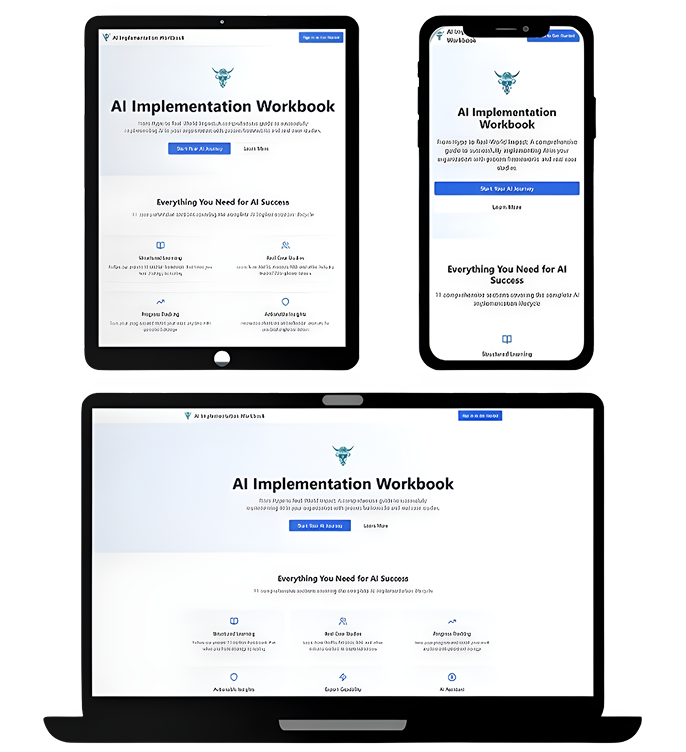
Limited-Time Access: AI Implementation Workbook App
Enter your details below to start using the app and discover where AI can save your business time, money, and stress.
Get Started with Intuitive Operations
Kindly fill out the form below and our team will get in touch with you shortly.