Category: The Rules Of Intelligence

Discover The Rules of Intelligence — simplify your tech stack to empower teams, cut costs, and drive lasting growth for your small business.

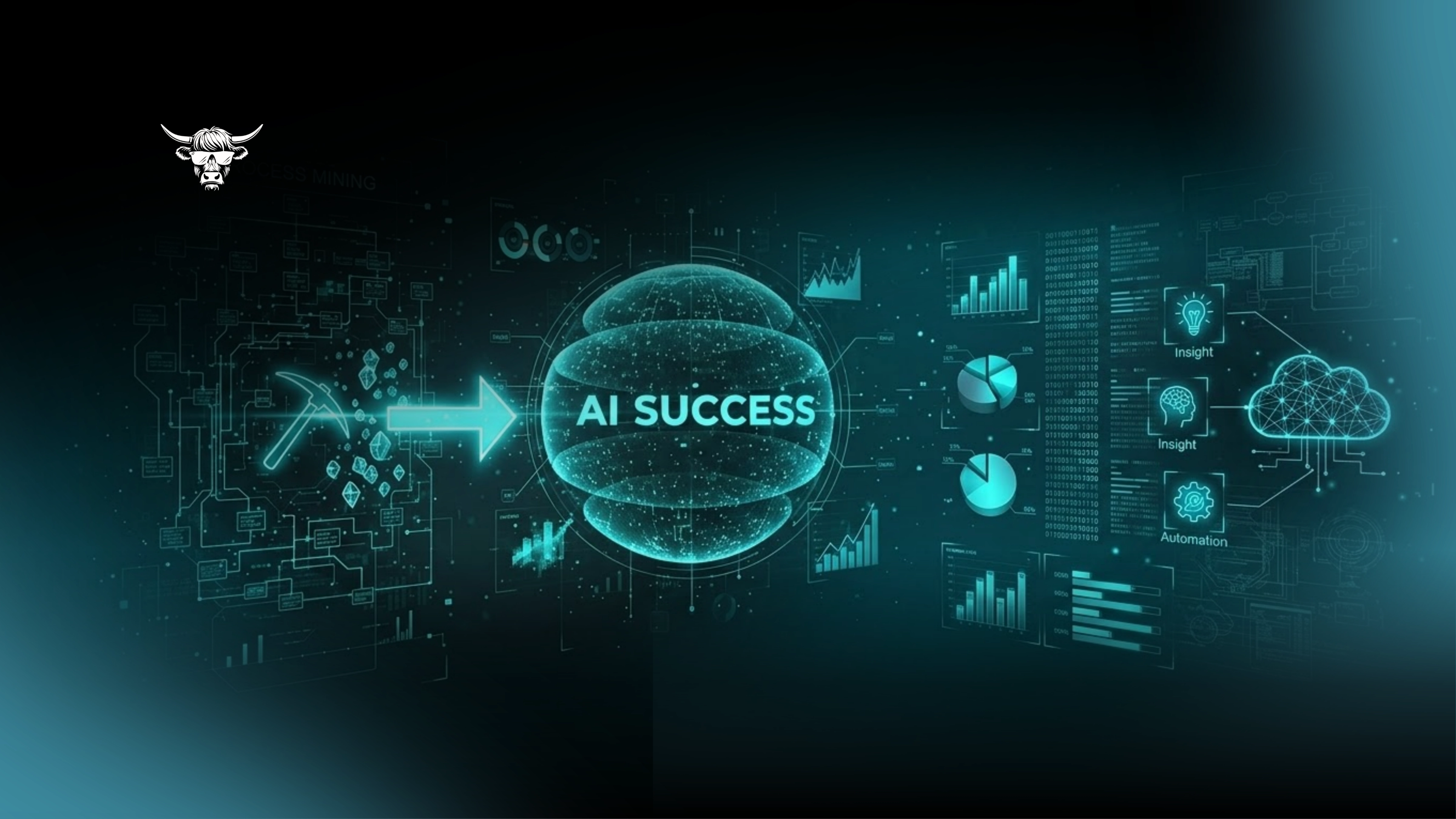
  • Case Study: How Process Mining and AI Transformed a Fortune 500

    Case Study: How Process Mining and AI Transformed a Fortune 500

    Introduction: Beyond the Automation Buzz

    Business process automation is no longer a luxury in 2026, it is the baseline for enterprise survival. However, the most successful leaders understand that automating a broken process only accelerates failure. True transformation requires a dual-threat approach: process mining and AI.

    We recently analyzed how a Fortune 500 leader successfully integrated these technologies to dismantle operational silos, eliminate “invisible” bottlenecks, and drive measurable, high-tier outcomes (Deloitte, 2025). By moving beyond the surface-level buzz, we can see exactly how data-driven visibility turns fragmented workflows into a unified engine for growth.

    The Challenge: Visibility in the Dark

    Like many enterprise-level organizations, this company struggled with “invisible” friction. Their challenges weren’t just about speed; they were about fragmented systems and manual redundancies that created decision-making bottlenecks (Gartner, 2025). Without a unified view of their data, they were automating broken processes rather than fixing them.

    Our 3-Step Transformation Framework

    Phase 1: Deep Process Discovery
    Before we apply AI, we must see the “truth” of the workflow. By utilizing process mining, the organization visualized every operational step across departments.
    The Result: They identified 14 hidden redundancies and mapped exactly where manual tasks were stalling high-value projects.
    Phase 2: AI-Driven Optimization
    Once the map was clear, AI moved from a passive tool to an active strategist. Algorithms analyzed the mined data to predict where future bottlenecks would occur.
    The Shift: Instead of just reacting to delays, the system began recommending optimizations in real-time, automating the most repetitive portions of the lifecycle.
    Phase 3: Integration & Real-Time Monitoring
    The final hurdle was ensuring these improvements weren’t temporary. By integrating AI directly into existing ERP and CRM systems, the company created a “living” operational dashboard.
    The Outcome: Automated scheduling and resource allocation meant the right people were on the right tasks at the right time (Deloitte, 2025).

    Results: Measurable Impact

    The impact was immediate and measurable:

    • 25% reduction in operational cycle time
    • 30% fewer manual errors
    • Improved decision-making with real-time insights

    Conclusion

    The synergy of process mining and AI is far more than a technical upgrade, it is a roadmap for high-scale operational intelligence. As this case study demonstrates, when we stop guessing where bottlenecks exist and start visualizing them through data, we move from reactive troubleshooting to predictive leadership.

    At Intuitive Operations, we’ve seen that organizations embracing this dual-threat approach don’t just work faster; they build a foundation of “Decision Intelligence.” By removing the friction of manual redundancies, we empower teams to focus on high-impact innovation, ensuring a competitive edge that manual processes simply cannot replicate in 2026.

    References

  • 5 AI Implementation Mistakes Companies Are STILL Making in 2026

    5 AI Implementation Mistakes Companies Are STILL Making in 2026

    Even in 2026, many mid-market companies struggle with AI implementation mistakes, which prevent AI from moving beyond pilot projects. Tools have improved, budgets have increased, yet adoption often stalls. The reason is simple: AI success isn’t just about technology. It’s about people, process, and strategy.

    In this post, I’m sharing the top 5 AI implementation mistakes I still see in 2026 and practical steps to overcome them, helping companies achieve enterprise-wide impact.

    Skipping Strategic Alignment

    Problem: AI is often treated as an IT project or “nice-to-have” rather than a business strategy. Without alignment with business goals, projects fail to scale.

    Solution:

    • Engage executives and stakeholders from the start
    • Define measurable objectives and KPIs
    • Connect AI initiatives to revenue, efficiency, or customer outcomes

    Real example: A mid-market logistics firm launched AI-powered route optimization without executive buy-in. The pilot delivered results, but no one knew how to scale it. Aligning goals later unlocked full enterprise adoption (Gartner, 2025).

    Poor Data Readiness

    Problem: Mid-market companies often rely on fragmented or inaccurate data. AI thrives on clean, structured, and high-quality data.

    Solution:

    • Conduct a data audit before AI adoption
    • Implement data governance practices
    • Consolidate data from silos for consistent AI inputs

    Organizations with poor data preparation are three times more likely to see AI projects fail (McKinsey, 2025).

    Underestimating Change Management

    Problem: Employees resist AI if they don’t understand its purpose or fear job loss. Without change management, adoption slows.

    Solution:

    • Launch AI literacy programs
    • Communicate the “why” behind initiatives
    • Provide reskilling opportunities and create AI champions

    Real example: A manufacturing company retrained staff on AI-assisted quality control. Adoption increased because employees saw AI as a tool, not a threat (Gartner, 2025).

    Ignoring Integration Challenges

    Problem: AI systems rarely exist in isolation—they need to integrate with existing software and workflows. Ignoring this leads to adoption roadblocks.

    Solution:

    • Assess all dependencies before AI rollout
    • Collaborate with IT teams for seamless integration
    • Choose flexible AI platforms with API capabilities (McKinsey, 2025)

    Failing to Measure and Iterate

    Problem: Many companies treat AI implementation as “set it and forget it.” Without ongoing measurement, projects plateau.

    Solution:

    • Track adoption metrics, efficiency improvements, and ROI
    • Iterate workflows and AI models based on feedback
    • Scale successful pilots gradually (Gartner, 2025)

    Conclusion: Avoiding AI Implementation Mistakes for Lasting Impact

    AI projects fail when companies focus only on software. By understanding and avoiding common AI implementation mistakes, organizations can ensure strategic alignment, clean data, effective change management, seamless integration, and continuous measurement.

    With proper AI implementation support, mid-market companies can overcome these pitfalls and achieve sustainable, enterprise-wide impact (McKinsey, 2025; Gartner, 2025).

    References:

  • From Decision Intelligence to Autonomous AI Operations in 2026

    From Decision Intelligence to Autonomous AI Operations in 2026

    Introduction

    In the past few years, organizations have relied heavily on decision intelligence solutions to convert data into actionable insights that help executives make informed choices and optimize operational decisions. However, 2026 marks a turning point: AI is no longer just supporting decisions; it is increasingly capable of autonomously executing business operations while aligning with corporate strategy. Companies that adapt early gain competitive advantage, while those relying solely on traditional decision intelligence risk falling behind. Building an autonomous AI operations strategy is now critical for maintaining competitiveness (Gartner, 2025).

    This post explores the evolution of decision intelligence and provides actionable steps for companies aiming to adopt autonomous AI operations.

    From Insights to Autonomous Action

    Decision intelligence traditionally focused on analyzing data and recommending decisions. The next evolution integrates automation and real-time action: AI-driven systems can now execute decisions, reducing human bottlenecks; predictive and prescriptive analytics recommend optimal courses of action; and closed-loop learning enables AI to refine recommendations based on outcomes.

    For example, a leading logistics company transitioned from route optimization recommendations to real-time autonomous route adjustments, reducing delivery times by 15% without human intervention (Gartner, 2025).

    Integrating AI Across the Enterprise

    Top organizations do not treat decision intelligence as an isolated capability. Instead, they embed autonomous AI across departments:

    • Finance: Systems autonomously flag or approve transactions within compliance boundaries.
    • HR: AI tools recommend, schedule, and even conduct initial candidate screenings.
    • Marketing: Dynamic campaigns adjust in real time based on customer behavior.
    • Operations: Autonomous inventory and resource allocation based on predicted demand.

    To begin, map high-impact processes that can benefit most from autonomous AI, then expand as confidence grows (Deloitte, 2025).

    Data Governance and Ethical AI Are Critical

    As AI moves from support to autonomous decision-making, risks increase. Organizations must implement robust governance, including data quality frameworks, ethical AI policies, and audit trails to ensure transparency and compliance.

    A financial services firm using autonomous AI to approve loans implemented governance measures that ensured decisions were explainable and compliant with anti-discrimination laws (McKinsey & Company, 2025).

    Preparing for Autonomous Business Operations

    To prepare effectively, companies should assess AI maturity across tools, processes, and team readiness. They should prioritize repeatable, high-value processes for automation before expanding to more complex tasks. Investing in employee AI literacy ensures that teams understand AI outputs and can intervene when necessary. Creating feedback loops to monitor performance, iterate, and scale gradually is essential.

    Research shows that organizations adopting autonomous AI operations can achieve 20–30% efficiency improvements within the first year (Deloitte, 2025).

    Embrace the Human + AI Partnership

    Even with autonomous operations, humans remain essential. Humans define strategy, set high-level goals, and establish boundaries within which AI operates. AI executes operational tasks at scale while teams focus on interpretation, innovation, and problem-solving. Autonomous AI does not replace humans; it amplifies human capabilities, freeing people to work on higher-value initiatives (Deloitte, 2025).

    Conclusion: The Next Frontier of Decision Intelligence

    Decision intelligence is evolving from guiding human decisions to driving autonomous business operations. Organizations that embrace this shift in 2026 will reduce operational bottlenecks, make faster data-driven decisions, free teams to focus on strategic priorities, and maintain competitive advantage. The next phase of AI is here. Are you ready to move from insights to autonomous action?

    References

  • Building an AI-Native Culture: Lessons from 2025’s Success Stories

    Building an AI-Native Culture: Lessons from 2025’s Success Stories

    Introduction: Why AI Adoption Still Fails Without an AI-Native Culture

    You’ve probably seen companies rush to adopt AI, rolling out tools and dashboards, only to find adoption stalls, projects fizzle, and investment goes down the drain. The missing ingredient is an AI-native culture—a workplace environment where AI is integrated into daily workflows, decision-making, and business strategy. Organizations that embrace an AI-native culture empower employees to use AI effectively, align leadership with technology goals, and ensure long-term success.

    In 2025, companies that succeeded didn’t just deploy AI—they built an AI-native culture where change management, workflow integration, and employee readiness went hand in hand. In this post, we’ll break down actionable lessons from these success stories so your organization can avoid common pitfalls and embrace AI effectively.

    Leadership Alignment Sets the Tone

    Employees take cues from the top. If executives see AI as a side project, adoption stalls.

    Successful organizations took steps such as:

    • Holding workshops with C-level leaders to align on AI objectives, ROI expectations, and KPIs
    • Assigning an AI champion in each department to bridge strategy and execution
    • Celebrating quick wins publicly to show AI’s tangible impact

    Example: A global retail chain integrated AI into inventory and demand forecasting. By publicly sharing the first successful pilot, managers across regions adopted AI in their workflows.

    Takeaway: Start at the top. Align leadership, define success metrics, and communicate wins to build momentum. Leadership alignment is critical to successful AI adoption and scaling, as highlighted by McKinsey & Company (2025).

    Embedding AI Into Daily Workflows

    AI succeeds when it solves real problems where people work. Top-performing organizations in 2025 avoided isolated pilots and instead integrated AI into everyday tasks:

    • Sales teams used predictive analytics to prioritize leads
    • HR departments implemented AI-assisted resume screening, saving hours per week
    • Operations teams automated scheduling and resource allocation with AI recommendations

    Pro tip: Map processes where AI can remove friction or add value immediately, rather than forcing adoption in areas that don’t need it yet.

    According to Gartner, Inc. (2025), embedding AI into daily workflows is one of the most effective ways to drive adoption and operational impact.

    Change Management Is Essential

    Even the best AI tools fail without human readiness. Change management is as critical as technology:

    • Conduct AI literacy sessions to help staff understand the “why” behind AI initiatives
    • Create feedback loops so employees can report issues or suggest improvements
    • Provide reskilling opportunities to reduce fear and resistance

    Example: A mid-market manufacturing company retrained 200 employees on AI-assisted quality control. By framing AI as a tool to simplify, not replace, jobs, adoption skyrocketed.

    Structured change management programs significantly improve enterprise AI adoption (Gartner, Inc., 2025).

    Continuously Measure Success

    Implementing AI isn’t a one-time project. Companies that thrived continuously measured outcomes:

    • Track user adoption metrics: Are employees using AI as intended?
    • Monitor process KPIs: Has productivity improved? Are errors decreasing?
    • Iterate: Adjust AI workflows based on feedback and results

    Insider tip: Start small, prove impact, then scale. A 10% improvement in one process can justify broader investment.

    Continuous measurement and communication of results help sustain momentum (McKinsey & Company, 2025).

    Building a Culture of AI Curiosity

    Beyond metrics and KPIs, culture is about mindset:

    • Encourage teams to experiment with AI tools without fear of failure
    • Share success stories across departments to build excitement
    • Recognize employees who contribute ideas on leveraging AI

    Real story: A financial services firm created an internal “AI innovation day,” where employees pitched AI use cases. Several ideas became pilots that scaled company-wide.

    Cultivating curiosity and experimentation encourages adoption and innovation (McKinsey & Company, 2025).

    Conclusion: Culture Is the Secret Sauce

    Organizations that succeeded understood a simple truth: AI adoption isn’t just about software—it’s about people. Enterprise AI integration and change management work best when culture, leadership, and workflows align.

    By taking a strategic, people-first approach, your organization can build an AI-native culture, accelerate adoption, and maximize ROI from AI initiatives.

    Book a Tech Simplification Session to explore how AI can work for your business.

  • Case Study: Streamlining Operations for a Small Dog Daycare

    Case Study: Streamlining Operations for a Small Dog Daycare

    Introduction:

    Small businesses often face operational inefficiencies, disconnected systems, and time-consuming manual processes. AI consulting for small business efficiency can simplify complex workflows like scheduling, client communication, and payments—helping businesses save time, reduce errors, and increase productivity.

    This case study shows how a small dog daycare and kennel optimized its operations with centralized systems, automation, and human-first processes.

    Challenges in Small Business Efficiency for Dog Daycare

    This daycare faced several operational hurdles:

    • Manual reservation approvals caused delays and scheduling conflicts
    • Attendance tracking and staff scheduling were managed separately
    • Client communication was scattered across email, chat apps, and SMS
    • Payments and billing processes were inconsistent
    • Staff spent excessive time on repetitive administrative tasks

    Without a structured approach, these inefficiencies led to wasted time, operational bottlenecks, and slower growth.

    Applying AI Consulting for Small Business Efficiency

    Intuitive Operations implemented a structured plan to simplify workflows, centralize tools, and introduce automation, following a human-first approach.

    1. Centralized Scheduling and Client Management
      • Implemented an online client portal for daycare and boarding reservations
      • Enabled real-time approval workflows and waitlist management
      • Integrated attendance tracking and staff scheduling
    2. Automated Communication and Payment Systems
      • Integrated two-way SMS and chat platforms for client communication
      • Automated appointment reminders, thank-you messages, and feedback requests
      • Enabled in-platform payments and SMS payment links to reduce administrative errors
    3. Hybrid Access & Staff Training for Efficiency
      • Provided cloud-based and desktop access for real-time operations
      • Delivered hands-on training for staff and comprehensive support documentation

    This approach reflects iO’s philosophy: small businesses don’t need more technology, they need smart, simple, and scalable systems that work for their team.

    The Results

    After implementing these solutions, the daycare achieved:

    • Centralized operations, reducing scheduling conflicts and administrative delays
    • Automated reminders and communications, improving client satisfaction
    • Integrated attendance tracking and staff scheduling, increasing internal efficiency
    • Simplified payment processing, reducing errors and saving staff hours
    • Staff able to focus on higher-value tasks instead of repetitive administrative work

    These results demonstrate the impact of AI consulting for small business efficiency when technology and human oversight are aligned.

    Key Takeaways

    • Begin with a thorough workflow and technology assessment
    • Centralize scheduling, communication, and payment systems to reduce inefficiencies
    • Train staff to work effectively with automated systems
    • Use automation strategically to improve operational efficiency and customer experience

    Conclusion: How AI Consulting Drives Efficiency

    Operational efficiency is not achieved by adopting every available technology—it comes from the right tools, implemented strategically, with staff fully supported.

    Intuitive Operations helps small businesses simplify their tech stack, streamline workflows, and implement systems that deliver measurable results.

    Book a Tech Simplification Session to discover how your business can achieve operational efficiency and scale effectively.

  • 10 Quick Wins: AI Applications You Can Implement This Quarter

    10 Quick Wins: AI Applications You Can Implement This Quarter

    Introduction:

    By 2026, intelligent automation solutions are no longer limited to large enterprises with massive budgets and data teams. Many of today’s most effective AI applications are practical, affordable, and well within reach for small and mid-sized businesses.

    At Intuitive Operations, we’re often asked the same question: “Where do we even start with AI?”

    The answer is simpler than most people expect. You don’t need a full digital transformation to see results. You need focused, well-aligned AI use cases that solve real operational problems. Below are 10 AI quick wins you can realistically implement this quarter to improve efficiency, clarity, and business outcome

    Why Intelligent Automation Solutions Deliver Fast AI Wins

    The fastest AI results come from automation that supports existing workflows, not from complex, high-risk experiments. When AI is applied with intention, it creates momentum and builds confidence across teams.

    1. AI-Powered Customer Support Triage

    AI can automatically categorize, prioritize, and route customer inquiries, resolving simple requests instantly.

    Why it works:

    • Faster response times
    • Less manual sorting
    • Better customer experience

    This is often one of the fastest intelligent automation solutions to deliver measurable ROI.

    2. Intelligent Document Processing

    Manually reviewing invoices, contracts, and forms takes hours each week. AI can extract, classify, and validate data automatically, reducing human error and processing time.

    This quick win is especially valuable for finance, operations, and compliance teams.

    3. Predictive Maintenance Alerts

    Instead of reacting to equipment failures, AI analyzes usage and sensor data to predict when maintenance is needed.

    According to IBM’s predictive maintenance research, organizations can reduce downtime by up to 35% and maintenance costs by as much as 25%.

    Why it matters: Prevention is always less expensive than disruption.

    4. AI-Assisted Forecasting

    AI improves demand, inventory, and resource forecasting by analyzing historical patterns alongside real-time data.

    Organizations using AI-driven forecasting tools report better planning accuracy and fewer operational surprises, as highlighted by McKinsey’s insights on AI in supply chains.

    5. Workflow Automation for Repetitive Tasks

    From report generation to data entry and approvals, AI-powered automation handles repetitive work that slows teams down.

    The results:

    • Faster turnaround times
    • Reduced burnout
    • More focus on strategic tasks

    This is one of the most accessible intelligent automation solutions for immediate productivity gains.

    6. AI Content Drafting for Internal Use

    AI can support internal documentation, SOP creation, summaries, and reporting. While humans still provide oversight, AI significantly reduces the time spent starting from a blank page. This is especially helpful for operations and knowledge management teams.

    7. Sales Pipeline Insights

    AI analyzes CRM data to identify stalled deals, predict close probability, and highlight follow-up priorities.

    Why it’s a quick win: Most organizations already have the data. AI simply helps surface what matters most.

    8. Quality Control with AI Vision

    AI-powered visual inspection systems detect defects faster and more consistently than manual checks.

    Manufacturers using AI vision solutions report improved consistency and reduced waste, as demonstrated by Siemens’ AI manufacturing solutions.

    9. AI-Powered Knowledge Search

    Instead of searching across folders, emails, and systems, AI can act as an internal knowledge assistant, delivering instant answers. Teams save time and reduce interruptions while improving information access.

    10. AI Readiness Assessment

    One of the most overlooked AI quick wins is clarity. An AI readiness assessment helps organizations identify:

    • Data gaps
    • Process inefficiencies
    • High-impact AI opportunities

    This step ensures that intelligent automation solutions are implemented with purpose, not guesswork.

    Conclusion

    You don’t need to implement every AI tool to see results. The fastest wins come from choosing the right intelligent automation solutions and aligning them with real operational needs.

    At Intuitive Operations, we help businesses move from AI curiosity to measurable outcomes through practical, human-first implementation.

    If you’re ready to identify the right AI quick wins for your business, Book a Tech Simplification Session and let’s map out your next steps together.

  • Why AI Projects Fail in 2026 (And How iO Ensures Success)

    Why AI Projects Fail in 2026 (And How iO Ensures Success)

    Introduction:

    Even in 2026, with all the amazing AI tools available, many AI projects still fail. It’s not because the technology is bad. It’s because strategy, data, and human alignment are often missing. Companies invest in AI expecting instant results, but without a strategic AI roadmap, even the most advanced AI can underperform. In this blog, we’ll explain why projects stumble today and how Intuitive Operations (iO) helps businesses turn AI into measurable results.

    1. Skipping the Strategic AI Roadmap 

    Jumping straight into AI without a clear plan is like building a house without a blueprint. A strategic AI roadmap and implementation plan defines goals, aligns with business priorities, and sets measurable success metrics. 

    We’ve seen companies try to use AI for inventory management or customer service without mapping out objectives first. The result? Confusing outputs, wasted time, and frustrated teams. When we help businesses build a strategic AI roadmap, the same AI systems deliver results that are measurable and predictable. 

    2. Data Challenges Are Still Real

    Jumping straight into AI without a clear plan is like building a house without a blueprint. A strategic AI roadmap and implementation plan defines goals, aligns with business priorities, and sets measurable success metrics. 

    We’ve seen companies try to use AI for inventory management or customer service without mapping out objectives first. The result? Confusing outputs, wasted time, and frustrated teams. When we help businesses build a strategic AI roadmap, the same AI systems deliver results that are measurable and predictable. 

    3. Overestimating What AI Can Do Alone

    AI is powerful, but it’s not magic. Some teams expect a system to solve problems with zero human guidance. That’s a recipe for disappointment. 

    Our approach? Human + AI collaboration. We design systems where AI provides recommendations, and people make the final decisions. This combination increases project success rates by over 30%. 

    4. Organizational Resistance & Change Management

    AI adoption isn’t just a tech project—it’s a culture shift. Teams resist change when they don’t understand the benefits or fear being replaced. At iO, we embed change management into every project: workshops, training, and hands-on guidance. 

    5. How We’re Making AI Work in 2026 

    Here’s how we make AI projects succeed where others fail: 

    • Conduct AI readiness assessments 
    • Build strategic AI roadmaps aligned with your business objectives 
    • Implement AI in manageable phases with measurable KPIs 
    • Provide training and human-first guidance 

    We don’t just deploy AI. We make it work for your business, giving you predictable results, faster ROI, and happier teams. 

    Conclusion

    AI projects don’t fail because the technology is flawed—they fail when strategy, data, and human alignment are missing. At Intuitive Operations, we help businesses turn AI potential into measurable results

    If you’re ready to move beyond experimentation and get AI working for you, book a Tech Simplification Session and let’s map out your AI roadmap together. 

  • AI in Manufacturing: Breakthrough Applications Transforming 2026 Factories

    AI in Manufacturing: Breakthrough Applications Transforming 2026 Factories

    Introduction:

    Imagine walking into a factory where machines anticipate problems before they happen, production lines adjust themselves in real-time, and quality checks are nearly flawless without someone watching every step. This isn’t science fiction. It’s what AI in manufacturing looks like in 2026.

    Businesses are moving beyond experiments and starting to scale AI across operations. From autonomous quality control to predictive supply chains, AI helps manufacturers save time, reduce errors, and boost efficiency. For many companies, AI isn’t just a tool, it’s the competitive edge that keeps them ahead.

    Autonomous Quality Control

    Manual inspections are slow, costly, and prone to mistakes. Today, AI-powered vision systems scan every product with incredible accuracy. They can spot defects in milliseconds, reduce waste, and keep product quality consistent, even on high-speed production lines.

    For example, automotive manufacturers using Siemens AI quality control systems report significant reductions in defects and rework, improving overall efficiency.

    Predictive Maintenance

    Traditional maintenance schedules often over-serve or under-serve machines. AI in manufacturing solves this by analyzing real-time sensor data to predict when parts might fail. This prevents unexpected breakdowns, reduces downtime, and saves money.

    Research from IBM Predictive Maintenance Solutions shows that predictive maintenance can reduce maintenance costs by around 25% and downtime by up to 35%, delivering clear value to manufacturers.

    AI-Driven Supply Chain Optimization

    AI is transforming supply chain management. By analyzing demand patterns, inventory levels, and logistics data in real time, AI can identify potential bottlenecks, suggest better routing, and optimize inventory placement.

    Manufacturers using AI-driven supply chain tools report improved delivery rates and 10–15% lower operational costs, even in volatile markets.

    Human and AI Collaboration

    AI doesn’t replace people. Instead, it amplifies their capabilities. Engineers and operators now collaborate with AI systems that provide insights, recommendations, and real-time analytics. This collaboration helps teams make smarter decisions faster and respond to challenges more effectively.

    For example, assembly line teams can adjust production schedules dynamically based on AI insights, reacting instantly to changes in demand or supply delays.

    Conclusion

    2026 is a turning point for manufacturing. Companies embracing AI in manufacturing aren’t just staying competitive. They’re redefining what’s possible.

    Curious how AI can transform your operations? Book a Tech Simplification Session to explore how AI can work for your business.

  • AI Training for Staff: Complete Guide to Safe and Effective Use

    AI Training for Staff: Complete Guide to Safe and Effective Use

    Introduction

    AI training for staff is essential in modern businesses. Every day, employees use AI tools to speed up tasks. Without proper guidance, errors can occur. Structured programs help teams understand security, governance, and ethical considerations while using AI safely. Implementing proper AI training ensures your staff can leverage tools effectively while minimizing risks.

    What AI Training for Staff Really Means

    Proper training goes beyond tool demos or software tutorials. Its main goal is to develop judgment, confidence, and awareness of safe AI practices. Employees learn to evaluate AI output critically and comply with company policies.

    Research shows that although 73% of employees use AI at work, only 30% of organizations provide training, and just 17% maintain formal policies (ISACA, 2024). Providing structured training reduces mistakes, prevents data leaks, and ensures decision-making remains accurate.

    Where AI Training for Staff Adds Value

    AI works best in repetitive or structured tasks that support human decision-making. This allows staff to focus on creative, strategic, and high-value work.

    Effective applications include:

    • Drafting initial versions of documents or ideas
    • Summarizing reports and emails
    • Analyzing data for actionable insights
    • Preparing meeting notes to streamline team alignment

    Applications that require caution:

    • Making decisions without human review
    • Sharing sensitive information in AI tools
    • Entering proprietary data into unapproved platforms

    Additionally, training ensures employees understand where AI is beneficial and where human oversight is necessary.

    AI Security Training for Staff

    Employees interact with AI directly, making security awareness critical. Many AI tools store inputs or retain conversation histories, so using unapproved platforms for sensitive data creates risks.

    Key security practices include:

    • Recognizing sensitive information, including client or internal data
    • Using only approved AI tools
    • Reporting incidents promptly
    • Following company retention policies

    Ongoing refreshers are essential as AI tools evolve (CyberCoach, 2025). This ensures staff remain aware of emerging security risks.

    AI Governance and Policy Training for Staff

    Policies clarify rules and expectations for safe AI use. Employees perform better when guidelines are clear.

    Good AI governance includes:

    • Approved and banned tools
    • Data handling and privacy rules
    • Roles and responsibilities
    • Disclosure requirements for AI-assisted outputs

    For example, employees must not enter client data into AI tools that retain inputs. Outputs should always be reviewed by trained staff. Only 31% of organizations have formal AI policies despite widespread AI use (TechRadar, 2025). Proper governance reduces risk and increases confidence in AI adoption.

    Developing Critical Thinking Skills in AI Training

    AI outputs can appear correct but still contain errors. Training should teach staff to:

    • Verify facts generated by AI
    • Ensure outputs fit the context
    • Identify potential bias or ethical concerns
    • Confirm compliance with internal policies or legal standards

    By practicing critical evaluation, employees reduce mistakes and gain confidence when using AI tools in their daily workflows.

    Step-by-Step AI Staff Training Program 

    Phase 1: Awareness (1 Week)

    This phase introduces AI fundamentals and company-specific use cases. Employees also learn why responsible AI use is important.

    Phase 2: Hands-On Workshops (2 Weeks)

    Staff practice using approved tools and work with anonymized data. Scenario-based security drills simulate real-world challenges.

    Phase 3: Role-Specific Modules (2 Weeks)

    • Sales: AI-assisted lead summaries
    • Marketing: Content drafts with review
    • Support: AI response suggestions
    • Operations: SOP creation with verification

    Phase 4: Ongoing Reinforcement

    Monthly Q&A sessions, refresher courses, and quarterly assessments help staff retain skills. Continuous learning ensures adaptation to evolving AI technologies.

    Measuring the Impact of AI Training for Staff

    To gauge success, track training results. For example:

    • Accuracy rate of AI outputs verified by humans
    • Number of security incidents reported
    • Adoption rate of approved tools
    • Time saved on repetitive tasks

    Monitoring these metrics demonstrates value to leadership and guides future improvements.

    Building an AI-Positive Culture Through Staff Training

    Culture encourages responsible AI adoption. Leaders can model proper AI use, while employees share insights and best practices. Teams should feel safe asking questions and reporting issues.

    Transparency and open communication reduce fear and increase confidence in AI tools across the organization.

    Recommended Tools and Templates for Staff AI Training

    • Secure internal AI platforms
    • Learning Management Systems for ongoing education
    • Privacy and data governance tools
    • Templates: AI security checklists, usage policies, incident reporting

    Using these resources makes training consistent and actionable.

    Common Questions and Misconceptions 

    Is AI replacing jobs? No, it complements human work by automating repetitive tasks and freeing teams to focus on strategic and creative activities.

    Can AI outputs be trusted? Not blindly; verification is essential.

    Should we appoint an AI officer? For large organizations, a governance lead can oversee AI use and training compliance.

    Conclusion

    AI training for staff ensures that tools are used safely and effectively. Structured programs, clear governance, and ongoing reinforcement maximize productivity while minimizing risks. Organizations that invest in training gain a competitive advantage in AI adoption.

    Want to empower your team with AI safely and effectively? Discover how Intuitive Operations can help streamline AI adoption, training, and security for your business.

  • Measuring AI Success: KPI-Driven AI Initiatives for Measurable Results in 2026

    Measuring AI Success: KPI-Driven AI Initiatives for Measurable Results in 2026

    AI adoption is no longer just about experimentation, businesses are moving from pilots to full operational programs. KPI-driven AI initiatives in 2026 make it possible to measure real business value and impact.

    1. Align AI KPIs With Business Objectives 

    The first step is to ensure that your KPIs directly support your business goals. Examples include: 

    • Efficiency: track time savings or process automation impact 
    • Revenue growth: track sales lift, conversion rates, or upsell opportunities 
    • Customer experience: monitor response times, resolution rates, and satisfaction scores 

    Research indicates that AI initiatives aligned with business objectives are more likely to deliver measurable results. (Gartner, 2026

    2. Focus on Operational KPIs, Not Just Experimental Metrics 

    Traditional AI metrics like model accuracy or algorithm performance don’t fully capture business impact. In 2026, operational KPIs are key: 

    • Efficiency gains: Reduction in manual tasks, cycle times, or errors 
    • ROI per initiative: Financial impact tied directly to outcomes 
    • User adoption: Percentage of employees or departments actively using AI 
    • Scalability potential: Ability to expand AI from pilot to enterprise-wide deployment 

    Focusing on operational KPIs ensures your AI program demonstrates tangible value to the organization. (Deloitte, 2025

    3. Use Data Quality and Usage Metrics 

    AI is only as effective as the data feeding it. Track metrics such as: 

    • Data coverage: Completeness of datasets 
    • Data freshness: Are inputs updated in real-time or near real-time? 
    • Data-driven decisions: Percentage of business decisions influenced by AI insights 

    Monitoring these metrics ensures AI is driving intelligent, informed decision-making. (McKinsey & Company, 2025

    4. Track Customer and Business Impact 

    AI initiatives should have measurable outcomes for both the business and customers. Examples include: 

    • Customer retention rate changes 
    • Revenue generated or cost saved 
    • Net Promoter Score (NPS) improvements 
    • Error reduction or compliance improvement 

    Organizations that focus on end-to-end business impact report higher adoption rates and ROI. (Forbes, 2025)

    5. Combine Leading and Lagging Indicators 

    • Leading KPIs: Early indicators such as system usage rates or process improvements 
    • Lagging KPIs: Outcome-focused metrics like cost savings, revenue increase, or customer satisfaction 

    Tracking both allows for continuous monitoring of adoption trends and business impact, enabling adjustments before issues escalate. (Deloitte, 2025) 

    6. Continuously Refine Your KPIs 

    AI tools and business needs evolve rapidly. Regularly reviewing and updating your KPIs ensures they remain aligned with strategic objectives and reflect current priorities. Companies that adjust KPIs quarterly or semi-annually achieve faster course corrections and greater long-term success. (Gartner, 2026

    Conclusion: Make Your AI Initiatives KPI-Driven 

    To unlock measurable results from AI in 2026: 

    • Align KPIs with business objectives 
    • Focus on operational and customer-impact metrics 
    • Track data quality, adoption, and scalability 
    • Monitor both leading and lagging indicators 
    • Continuously refine your metrics 

    KPI-driven AI initiatives are essential for proving value and scaling AI successfully across your organization.